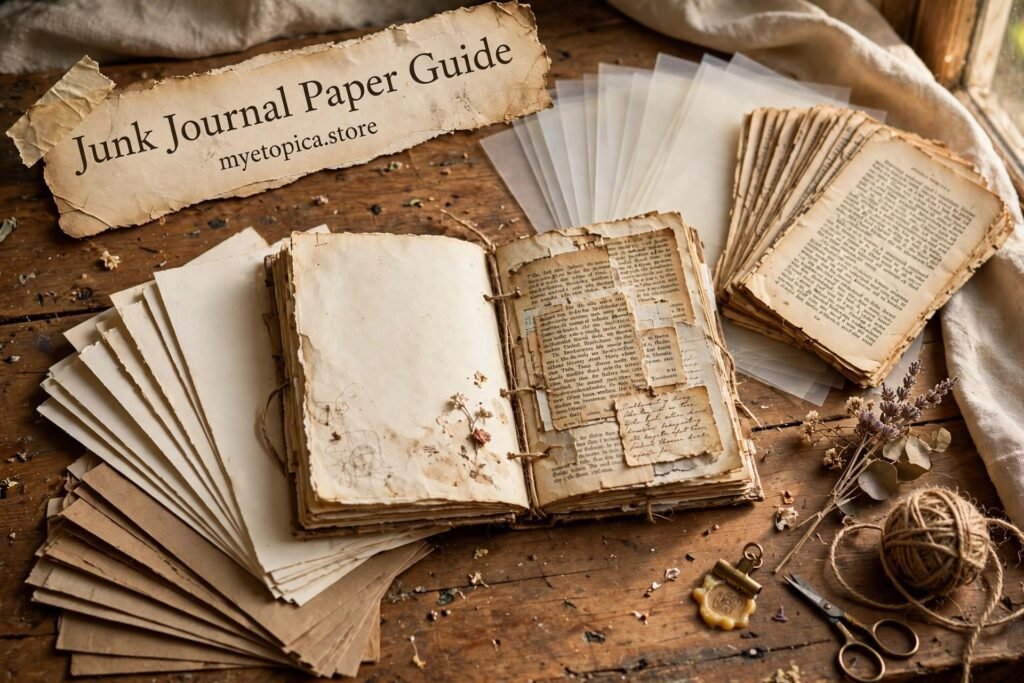
What paper should you use for a junk journal? The short answer is a mix: medium-weight paper (100–160 GSM) for your signatures, heavier cardstock (200+ GSM) for covers, pockets and tags, and specialty papers like kraft, vellum and vintage book pages for texture and character. There is no single “right” paper — the magic of junk journaling is in the mix.
But not all paper behaves the same way. Choose the wrong weight and your pages warp, ink bleeds through, or your printer jams at the worst moment. This guide covers the main junk journal paper types, what GSM means, which paper suits each part of your journal, home printing tips, and the mistakes to avoid. New to the craft? Start with our complete guide on what junk journaling is, then come back here to choose your papers with confidence.
Paper Weight Made Simple: What GSM Really Means
GSM stands for grams per square metre — a measure of how heavy (and usually how thick) a sheet is. The higher the GSM, the thicker and sturdier the paper. Learn this one number and choosing the best paper for junk journals gets dramatically easier:
- 75–100 GSM — standard printer paper and most book pages. Thin, flexible, easy to fold and sew. Great for pages, too flimsy for covers.
- 100–160 GSM — the sweet spot for journal pages. Sturdy enough for light collage and writing on both sides, flexible enough to fold cleanly.
- 160–220 GSM — medium cardstock. Ideal for pockets, tuck spots, flip-outs and journaling cards.
- 220–300+ GSM — heavy cardstock. Best for covers, tags, dividers and anything handled often.
You may also see weight in pounds (lb), the North American system — but it converts messily (80 lb cover stock is roughly 215 GSM, while 80 lb text paper is only about 120 GSM). When in doubt, shop by GSM.
Junk Journal Paper Types Explained
These are the main junk journal paper types you will meet, from everyday basics to the specialty papers that give journals their signature look.
Standard Printer Paper (75–100 GSM)
Plain copy paper is the workhorse of junk journaling: cheap, folds crisply, sews easily and prints beautifully. Use it for everyday pages, practice layouts and inner signature pages. Its weakness is durability — it tears easily, wrinkles with glue, and thin sheets let markers show through. For double-sided journaling, step up to at least 100 GSM.
Cardstock (160–300+ GSM)
Junk journal cardstock is your journal’s structural backbone. Medium cardstock (160–220 GSM) makes excellent pockets, tuck spots and journaling cards; heavy cardstock (230+ GSM) is the go-to for covers, tags and dividers. It tea-dyes and distresses gorgeously while holding its shape. Keep cream and kraft cardstock on hand — the two neutrals you will reach for constantly.
Kraft Paper
Brown kraft brings instant rustic warmth, from grocery-bag brown to lighter tans. Thin kraft is wonderful for wrapping signatures and making envelopes; kraft cardstock is a favourite for covers and tags. It takes distress ink, stamping and tea dyeing exceptionally well, and its neutral tone makes vintage ephemera pop.
Scrapbook Paper
Patterned scrapbook paper (usually 160–220 GSM) adds instant decoration — florals, damasks, vintage maps. One sheet can become a pocket, a belly band or a background layer. Use patterns as accents against plainer papers rather than for every page, so spreads do not feel overwhelming.
Vellum and Tracing Paper
Translucent vellum adds a dreamy, layered quality: overlays on photos, delicate envelopes, soft dividers. Glue shows through it, so use a thin line of adhesive along the very edge, or brads and stitching instead. Laser printers handle vellum well; let inkjet prints dry fully to avoid smearing.
Handmade and Deckle-Edge Paper
Handmade cotton or mulberry paper with feathered deckle edges brings artisan texture to covers, dividers and special journaling pages. It tears into beautiful soft strips. A little goes a long way — one or two handmade pages per signature is plenty.
Found Papers: Book Pages, Music Sheets and Ephemera
Vintage book pages, sheet music, old maps and ledger paper are the soul of junk journaling. Most are thin (60–90 GSM), so use them as decorative layers, tip-ins and collage elements rather than structural pages. Skip brittle, crumbling sheets — they belong in a frame, not a journal. For project ideas, see our guide on how to make a junk journal from an old book.
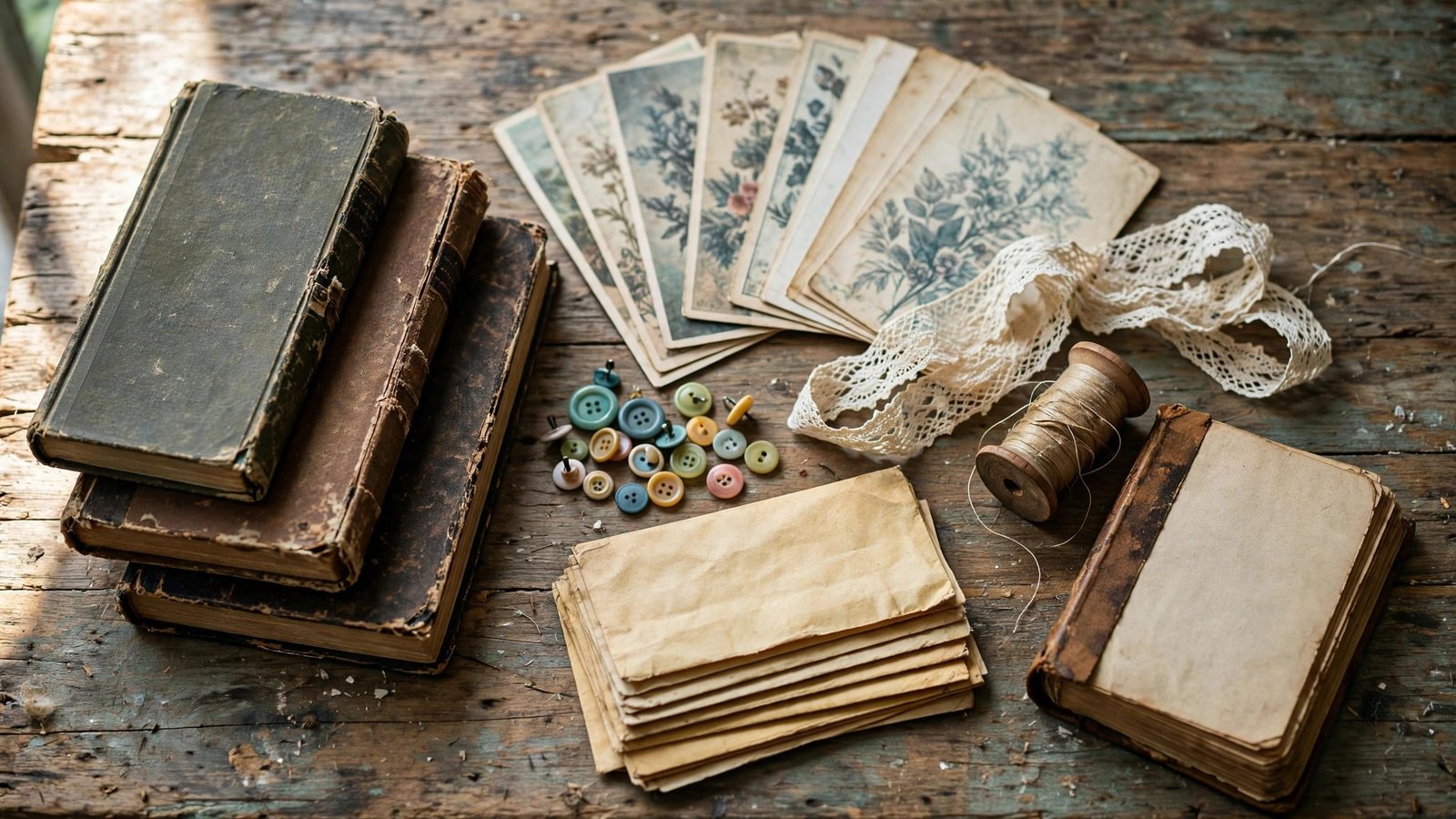
The Best Paper for Each Part of Your Junk Journal
Match the paper to the job:
- Signature pages: 100–160 GSM paper or light cardstock. Folds without cracking and sews cleanly. Alternate plain pages with book pages and kraft for that chunky, textured look.
- Cover: 230+ GSM cardstock, chipboard or a repurposed book cover. It protects everything inside — go heavy.
- Pockets and tuck spots: 160–220 GSM cardstock or scrapbook paper. Sturdy enough to hold tags without sagging.
- Tags and journaling cards: 200+ GSM cardstock. Tags get handled a lot; heavier paper keeps them crisp.
- Journaling spots: 100–140 GSM paper in a light colour so writing shows — lined, dotted or plain.
- Envelopes and flips: 90–160 GSM. Light enough to fold neatly, heavy enough to survive opening and closing.
Once your papers are chosen, our step-by-step guide to starting a junk journal walks you through assembling everything into signatures.
Printer Paper vs Cardstock vs Kraft: Which Wins?
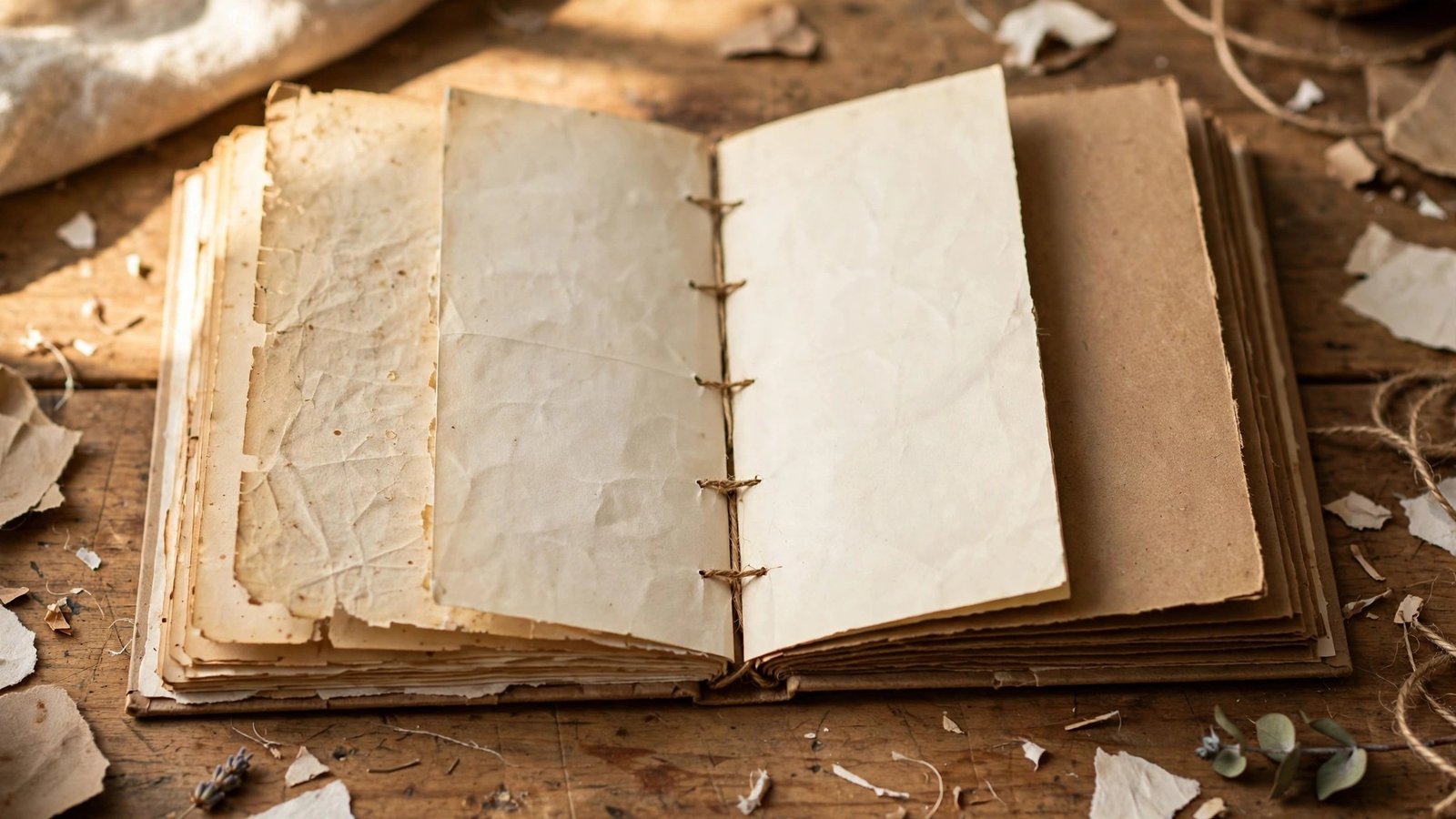
No single winner — each shines in its role. Printer paper wins for everyday pages and home printing: cheapest, feeds through any printer, perfect for printed ephemera. Cardstock wins for structure: covers, pockets and tags that must stand up to handling. Kraft wins for warmth and versatility: it works across pages, covers and embellishments, distresses beautifully, and ties mixed papers together. The best journals use all three.
Acid-Free and Archival Paper: Should You Care?
Acid-free paper resists yellowing and brittleness; archival-grade paper goes further with buffered, lignin-free fibres meant to last decades. If you want your journal to look beautiful in twenty years, choose acid-free paper for main pages and covers. That said, junk journaling celebrates imperfection — vintage found papers are rarely acid-free, and that is part of their charm. A practical middle ground: acid-free paper for structural pages, vintage papers as accents. Store finished journals out of direct sunlight and damp rooms.
How to Print at Home Without the Headaches
Most junk journalers print their own ephemera and journal cards. A few settings make all the difference.
Pick the right printer for your technique. Laser printers give crisp, smudge-proof prints that survive tea dyeing and wet distressing without bleeding. Inkjet printers give richer colour but the ink can bleed when wet — seal inkjet prints with a light spray fixative before distressing.
Set the correct paper type. In the print dialog, match the media type to what is loaded (“cardstock,” “heavy paper,” “matte”) so the printer slows down and lays the right amount of ink. Printing cardstock on the “plain paper” setting is the number one cause of smudging and jams.
Feed heavy paper correctly. Use the rear feed or manual tray for anything over 160 GSM, feed one sheet at a time for heavy cardstock, and let prints dry fully before stacking.
Use best quality for keepsakes. “Best” or “high” quality with the right paper profile gives noticeably richer vintage tones on ephemera. Draft mode is fine for test prints.
Where to Buy Junk Journal Paper
You do not need expensive supplies. Your recycling pile — envelopes, packaging, old books, maps — is free and full of character. Craft and office stores are best for cardstock variety packs, kraft pads and quality printer paper in many weights. Online marketplaces suit bulk buys; search by GSM to get exactly the weight you need. Digital downloads — printable vintage ephemera and journal cards — are the most economical way to build a varied stash: print exactly what you need, when you need it.
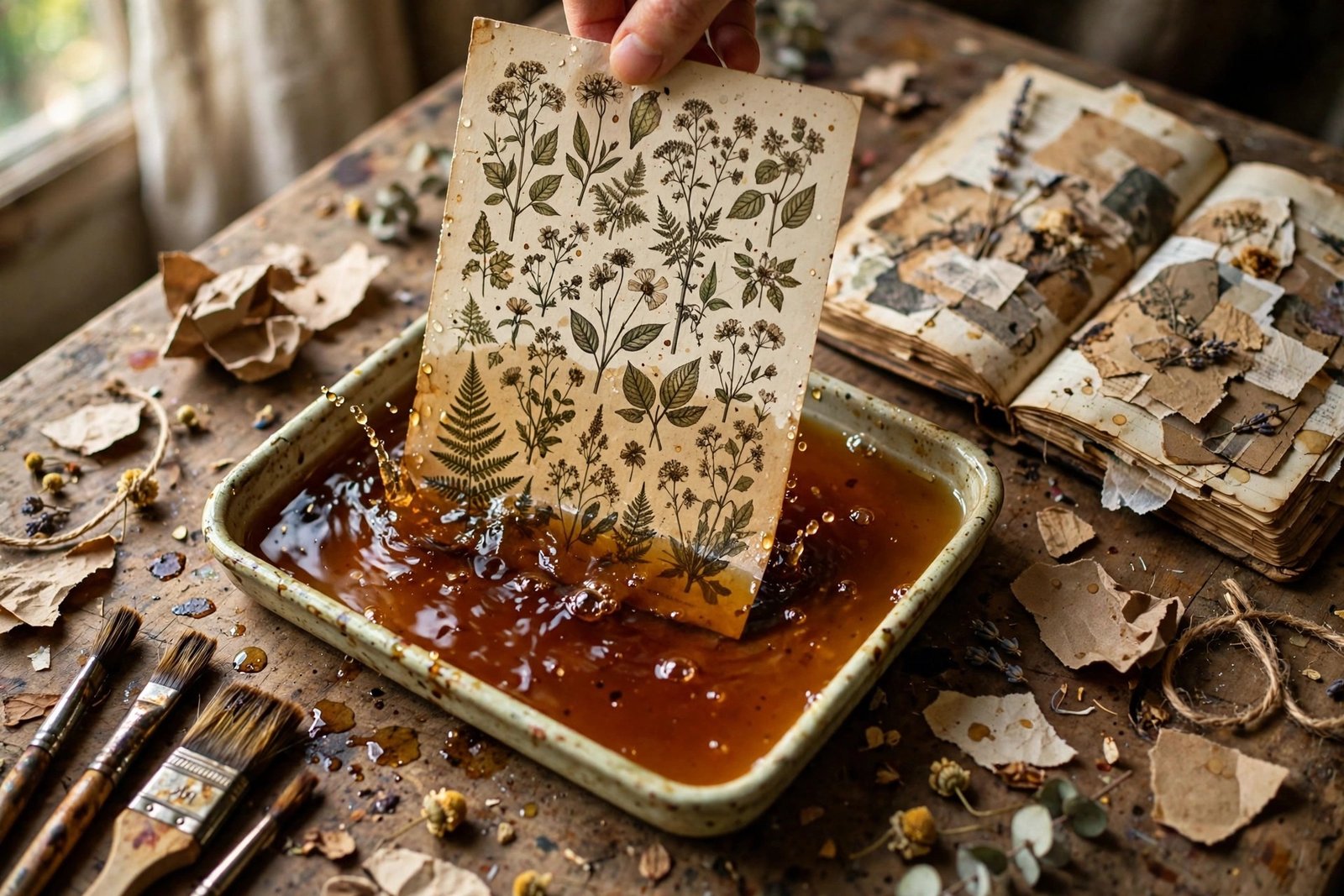
Love the aged look? Learn how to age and distress paper for a dreamy vintage look — plain printer paper transforms completely with tea and ink.
7 Paper Mistakes to Avoid
- Too-thin paper for wet techniques. Tea dyeing or heavy glue on 80 GSM paper causes warping and tearing — use 120+ GSM for anything that gets wet.
- Too-thick paper for signatures. Sewing 250 GSM cardstock into signatures gives a stiff, crack-prone spine. Keep signature pages at 160 GSM or below.
- Skipping the paper-type setting. Match the printer setting to the stock every time to avoid smudging and jams.
- Forcing heavy stock through the main tray. Use the rear or manual feed for cardstock.
- Ignoring grain direction. Paper folds cleanly along its grain and cracks against it — test by gently bending, and fold with the easier direction.
- Gluing vellum like regular paper. Adhesive shows through; use edge-only glue or stitching instead.
- Using only one paper type. All printer paper feels flat; all cardstock feels stiff. The beauty is in the mix.
Key Takeaways
- Use 100–160 GSM paper for signature pages, 160–220 GSM cardstock for pockets and tags, and 230+ GSM for covers.
- GSM measures paper weight — higher numbers mean thicker, sturdier paper. Shop by GSM, not by “lb.”
- The best junk journals mix paper types: printer paper, cardstock, kraft, vellum and found vintage papers.
- Match printer settings to your paper type, feed heavy stock through the rear tray, and let inkjet prints dry before distressing.
- Choose acid-free paper for structural pages if you want your journal to last; enjoy vintage papers as accents.
- Print your own ephemera at home — the cheapest way to build a varied, beautiful paper stash.
Love vintage-style papers? Our printable vintage ephemera and clipart kits at Etopica on Etsy are made for junk journaling — aged backgrounds, botanical illustrations, labels and journal cards you can print at home in any size, with commercial use included. Print them on the papers from this guide and watch your journal come alive.
Frequently Asked Questions
What is the best paper for junk journals?
The best paper for junk journals is a mix: 100–160 GSM paper for signature pages, medium cardstock (160–220 GSM) for pockets and journaling cards, and heavy cardstock (230+ GSM) for covers and tags. Add kraft, vellum and vintage found papers for texture and character.
What GSM paper is best for junk journal pages?
For signature pages, 100–160 GSM is ideal — sturdy enough for double-sided writing and light collage, flexible enough to fold and sew without cracking. Standard 80 GSM printer paper works for inner pages but wrinkles more easily with glue and wet techniques.
Can I use regular printer paper in a junk journal?
Yes. Regular printer paper (75–100 GSM) is perfect for everyday pages, printed ephemera and practice layouts. For pages that will get wet or carry heavy collage, step up to 120 GSM or heavier to prevent warping and tearing.
What paper should I use for a junk journal cover?
Use heavy cardstock (230+ GSM), chipboard, or a repurposed hardcover book cover. The cover protects everything inside, so choose the sturdiest paper you have and decorate it with layered collage, fabric or stamping.
What is junk journal cardstock used for?
Junk journal cardstock is used for everything structural: covers, pockets, tuck spots, tags, journaling cards, belly bands and dividers. Medium cardstock (160–220 GSM) suits pockets and cards; heavy cardstock (230+ GSM) is best for covers and tags.
Which junk journal paper types are best for tea dyeing?
Printer paper (100+ GSM), cardstock and kraft paper all tea-dye beautifully. Laser prints hold up best since toner will not bleed; seal inkjet prints with spray fixative first. Avoid thin 80 GSM paper — it warps and tears when wet.
Do I need acid-free paper for junk journals?
It depends on your goals. Acid-free paper resists yellowing and lasts decades, so use it for structural pages and covers if longevity matters. Vintage found papers are rarely acid-free — use them as decorative accents and store finished journals away from sunlight and dampness.
What is the best paper for junk journals?
A mix: 100–160 GSM paper for signature pages, medium cardstock (160–220 GSM) for pockets and journaling cards, and heavy cardstock (230+ GSM) for covers and tags. Add kraft, vellum and vintage found papers for texture and character.
What GSM paper is best for junk journal pages?
100–160 GSM is ideal — sturdy enough for double-sided writing and light collage, flexible enough to fold and sew without cracking. Standard 80 GSM printer paper works for inner pages but wrinkles more easily with glue and wet techniques.
Can I use regular printer paper in a junk journal?
Yes. Regular printer paper (75–100 GSM) is perfect for everyday pages, printed ephemera and practice layouts. For pages that will get wet or carry heavy collage, step up to 120 GSM or heavier.
What paper should I use for a junk journal cover?
Heavy cardstock (230+ GSM), chipboard, or a repurposed hardcover book cover. The cover protects everything inside, so choose the sturdiest paper you have.
What is junk journal cardstock used for?
Everything structural: covers, pockets, tuck spots, tags, journaling cards, belly bands and dividers. Medium cardstock suits pockets and cards; heavy cardstock is best for covers and tags.
Which junk journal paper types are best for tea dyeing?
Printer paper (100+ GSM), cardstock and kraft paper all tea-dye beautifully. Laser prints hold up best; seal inkjet prints with spray fixative first. Avoid thin 80 GSM paper — it warps and tears when wet.
Do I need acid-free paper for junk journals?
Acid-free paper resists yellowing and lasts decades, so use it for structural pages and covers if longevity matters. Vintage found papers are rarely acid-free — use them as decorative accents and store finished journals away from sunlight and dampness.
Our Etsy shop is full of adorable printable cliparts — birthday boys & girls, sweet animals, summer and spring themes — designed to print at home and layer straight into your journal.
Browse the Clipart Shop ↗
Leave a Reply