
Junk journal ephemera is the collection of vintage and found paper treasures that give a junk journal its soul. The word “ephemera” comes from the Greek word for things that last only a day, and it refers to printed or written items that were never meant to be kept: old letters, postage stamps, ticket stubs, receipts, advertisements, and pages from long-forgotten books. In junk journaling, these small pieces of everyday history become your most powerful creative material. This guide covers 30+ types of ephemera, where to find vintage ephemera free or cheap, how to organize your stash, and when to use originals versus copies.
30+ Types of Junk Journal Ephemera
Here are 30+ types of ephemera, grouped so you can recognize them in the wild. Almost all cost little or nothing, and each adds instant character to a page.
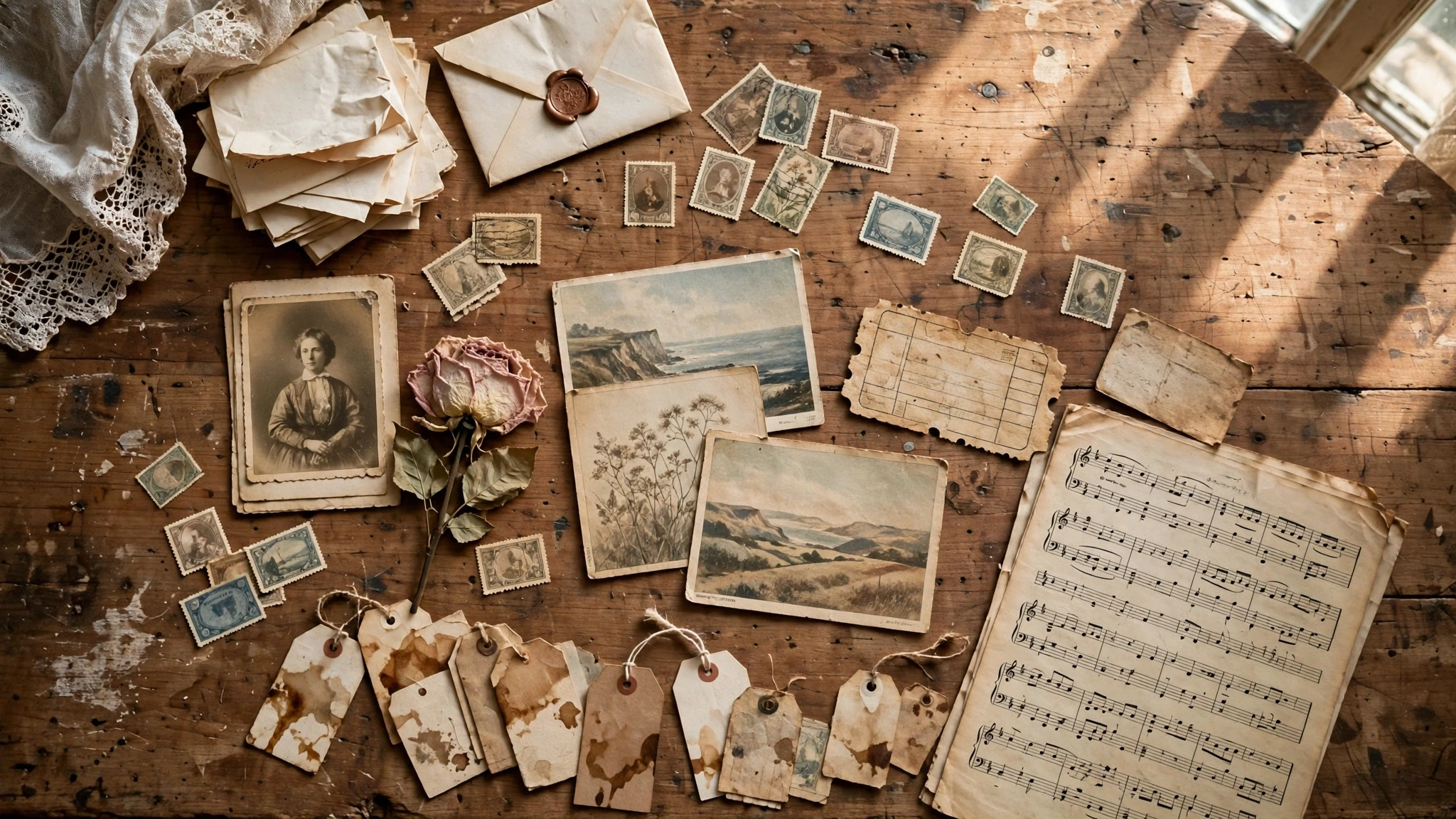
Postal and Mail Ephemera
Mail-related pieces are abundant, affordable, and instantly nostalgic.
- Handwritten letters. Real handwriting is the holy grail of junk journal ephemera. Even fragments of old correspondence add unmatched personality to a spread.
- Used envelopes. The fronts carry stamps and postmarks; the insides often have beautiful patterned or colored security linings.
- Postcards. Vintage postcards, written or blank, layer beautifully as journaling cards and page tabs.
- Postage stamps. Small, colorful, and endlessly collectible; buy mixed worldwide packets cheaply.
- Postmarks and cancellations. Clip the corner of an envelope to keep a bold cancellation mark as a collage accent.
- Airmail labels and stickers. The classic red-and-blue striped “Par Avion” borders make striking page edges.
- Parcel tags and shipping labels. Sturdy manila tags with string bring an authentic postal feel.
Paper Goods and Printed Pages
These background builders can be torn, layered, and collaged.
- Old book pages. Damaged novels, encyclopedias, and atlases are perfect for collage, tuck spots, and altered pages.
- Sheet music. Aged music sheets are a journaling classic, especially for romantic or vintage-themed spreads.
- Ledger and journal pages. Hand-ruled account books with faded ink entries add gorgeous written texture.
- Dictionary pages. Interesting words and definitions can double as journaling prompts on a page.
- Maps and atlas pages. Essential for travel journals; pair them with our travel junk journal guide for themed ideas.
- Calendar pages. Vintage calendars offer pretty illustrations plus ready-made date markers.
- Graph paper and invoices. Old office papers, order forms, and lined sheets make wonderful neutral layers.
Advertising and Commercial Ephemera
Advertising pieces are colorful, bold, and packed with the typography that makes collage pages pop.
- Vintage advertisements. Clip retro ads from old magazines for instant focal points.
- Trade cards. Small 19th-century advertising cards that look stunning on journal pages.
- Product labels. Vintage food, soap, and medicine labels bring authentic retro charm.
- Coupons and receipts. Grocery receipts and old coupons document everyday life and make great tuck-ins.
- Business cards. Old-fashioned letterpress business cards work well as tags and labels.
- Tickets and stubs. Train, theater, and cinema tickets are journaling favorites.
Personal Documents and Records
These pieces tell real human stories; use copies when a document matters to your family history.
- Greeting cards. The fronts of old birthday and holiday cards are ready-made journal cards.
- Recipe cards. Handwritten family recipes deserve a place of honor, such as a journal made from an old book.
- Library cards and due-date slips. Small, text-rich, and perfect for pockets and flips.
- Certificates and diplomas. Copies of old awards and school certificates add a personal-history layer.
- Bank checks and old currency. Outdated checks and foreign banknotes add rich detail. Never journal with spendable cash.
- Announcements. Birth, wedding, and graduation announcements capture milestone moments beautifully.
Nature and Botanical Ephemera
Botanical pieces soften a journal and pair wonderfully with pressed flowers and natural dyeing.
- Dried pressed flowers and leaves. Free, delicate, and endlessly pretty when glued to pages or slipped behind vellum.
- Seed packets. Vintage seed packets combine botanical illustration with lovely old typography.
- Botanical prints. Pages from old gardening books make frame-worthy collage material.
- Feathers. Found feathers tuck beautifully into journal clips and pockets.
Textural and Oddball Finds
These are the pieces that make a junk journal feel like a treasure chest rather than a scrapbook.
- Fabric scraps and lace. Vintage lace trim, quilt squares, and linen scraps add softness and dimension.
- Ribbons and trims. Salvaged from gift wrap and old garments, perfect for page ties and dangles.
- Playing cards. Vintage playing cards make sturdy journaling spots and bold page accents.
- Cigarette cards. Tiny collectible picture cards from early-1900s tobacco packs; miniature works of art.
- Paper dolls. Vintage paper doll sheets are playful additions to whimsical or childhood-themed journals.
- Telegrams. Rarer now, but a genuine telegram page is an unforgettable journal centerpiece.
Where to Find Ephemera for Junk Journals
Here is where to find ephemera, from free sources to curated kits that save hunting time.
Free Sources Around Your Home
Start at home: old mail, birthday cards, wrapping paper, road atlas maps, and kitchen-drawer odds and ends are all usable. See our list of junk journal supplies you already have at home for more. Ask relatives too; attics and old desks are legendary sources of letters and postcards, and most people happily share duplicates.
Thrift Stores, Flea Markets, and Antique Shops
Thrift shops are the classic hunting ground. Check the book section for damaged old books, browse baskets of photos and postcards, and ask staff about unshelved boxes of paper goods. Flea markets and estate sales often yield boxes of letters for a few dollars. Antique shops cost more but reliably stock stamps, trade cards, and advertising pieces.
Printable Ephemera
Printable ephemera is the fastest way to build a stash. Digital downloads let you print unlimited copies of vintage-style letters, labels, tags, and backgrounds, so you can experiment freely without fear of ruining an original. Print on matte presentation paper for the most convincing results.
Looking for printable vintage ephemera? Etopica sells printable cliparts and vintage ephemera for junk journals on Etsy, including aged letters, stamps, labels, and themed ephemera packs you can print at home again and again. Browse the collection here: Etopica on Etsy.
Curated Ephemera Packs
Ephemera packs skip the hunt entirely. These curated bundles gather dozens of coordinated pieces around themes like botanical, postal, or Victorian, so pages look cohesive with zero effort. They make excellent beginner gifts and quick restocks; just check whether a pack lists originals or reproductions before buying.
How to Use Ephemera in Your Junk Journal
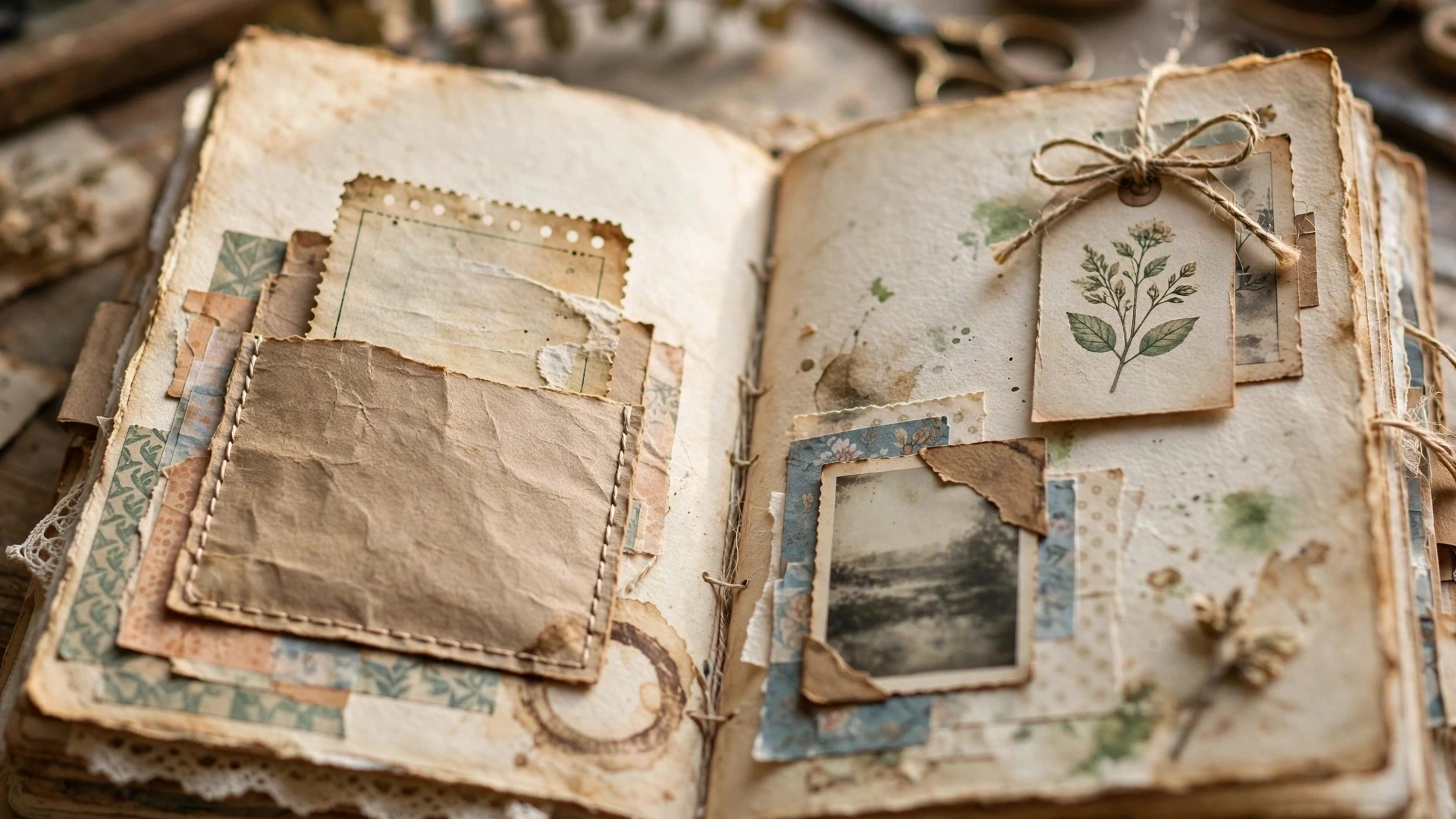
Ephemera shines when it interacts with the journal. Use sturdy tickets and tags as tuck spots, turn envelopes into pockets by gluing three edges, and layer thin book pages under bold pieces for depth. Write directly on ledger pages and postcards to merge your words with the vintage texture. Add interactive elements: hinged flaps from greeting cards, pull-out letters from envelopes, and belly bands from airmail labels. For more filling ideas, browse our ideas for what to put in a junk journal.
How to Store and Organize Your Ephemera Stash
Sort ephemera by type (stamps, tags, letters, images) or theme (postal, botanical, holiday) into clear zip bags, small boxes, or an accordion file so you can see everything. Keep fragile originals flat, away from sunlight and humidity, and photograph rare pieces before using them. Keep a small “working tray” of favorites on your desk; visible pieces get used instead of hoarded.
Originals vs. Copies: Which Should You Use?
One rule decides it: if a piece is irreplaceable, scan it and journal with the copy. Family letters, one-of-a-kind photos, and genealogical documents deserve preservation, and modern scans look nearly identical on the page. Use true originals for plentiful, replaceable pieces like common stamps, duplicate postcards, and thrift-store finds. Most journalers mix both: an original ticket stub as the centerpiece, copies of letters for texture. Copies free you to experiment boldly; originals carry an authentic patina.
Key Takeaways
- Ephemera means paper items never meant to be kept; 30+ types work in junk journals, from stamps and letters to seed packets and lace.
- The best free sources are your own home, relatives’ attics, libraries, and printable downloads.
- Thrift stores, flea markets, and estate sales are the top cheap sources; ephemera packs save time with themed bundles.
- Use ephemera interactively: pockets, tuck spots, pull-outs, and flaps make a journal fun to explore.
- Scan or photograph irreplaceable originals and journal with copies; reserve true originals for plentiful, replaceable pieces.
Frequently Asked Questions
What is considered ephemera in junk journaling?
Ephemera in junk journaling means vintage or found paper made for short-term use rather than keeping: letters, postcards, stamps, envelopes, tickets, receipts, advertisements, labels, book pages, sheet music, maps, tags, and documents. Anything with age, patina, or a story qualifies.
Where can I find vintage ephemera for free?
Your own home (old mail, cards, wrapping paper), relatives sharing duplicates from attics, library sales and free-book bins, and free printable downloads online. Many journalers also trade pieces with friends to keep stashes fresh at no cost.
What are ephemera packs and are they worth buying?
Ephemera packs are curated bundles of themed paper pieces sold on Etsy and in craft shops. They are worth buying when you want a coordinated set without hunting, need to restock fast, or are gifting supplies to a beginner. Check whether a pack contains originals or reproductions first.
Should I use original vintage ephemera or copies in my journal?
Use copies for anything irreplaceable, like family letters or one-of-a-kind documents, after scanning the original. Use originals for plentiful, replaceable pieces such as common stamps, duplicate postcards, and damaged book pages. Mixing both is the most common approach.
How do I organize my ephemera collection?
Sort by type or theme into clear zip bags, small boxes, or an accordion file so everything is visible. Store fragile originals flat, away from sunlight and moisture, and photograph rare pieces before using them. Keep a working tray of favorites on your desk so your stash gets used.
Can I print my own ephemera at home?
Yes. Digital downloads can be printed unlimited times on matte presentation paper or aged-looking cardstock. Home printing is ideal for experimenting, since you can reprint anything you spoil, and it lets you scale pieces to your exact page size.
What is the difference between ephemera and embellishments?
Ephemera is vintage or found paper with a history, like stamps, letters, and tickets. Embellishments are new decorative items made for crafting, such as stickers, washi tape, and charms. Most junk journals use both together.
Our Etsy shop is full of adorable printable cliparts — birthday boys & girls, sweet animals, summer and spring themes — designed to print at home and layer straight into your journal.
Browse the Clipart Shop ↗
Leave a Reply