
The best thrift store finds for junk journals are old hardcover books (for altered-book journal bases), vintage postcards, handwritten ledgers, sheet music, aged documents, lace and fabric scraps, and old office supplies like envelopes and carbon paper. These items are cheap, plentiful, and already carry the authentic aged patina that junk journalers spend hours trying to fake with tea stains and distress ink.
Thrifting for junk journal supplies is one of the most enjoyable parts of the hobby. Every visit is a treasure hunt, and a single dollar can buy enough ephemera for several journals. But knowing what to grab and what to walk past makes the difference between a bag full of gold and a bag full of clutter. This guide covers exactly what to look for, what to skip, what to actually pay, and how to clean and prep your finds.

Why Thrift Stores Beat Craft Stores for Junk Journalers
Craft stores sell you “vintage-look” paper designed last Tuesday. Thrift stores sell you the actual thing: paper that aged naturally over decades. Real patina cannot be faked, and it costs a fraction — a ten-dollar craft-store paper pack buys entire books, ephemera bundles, and lace by the bagful at a thrift store.
Constraint also breeds creativity: designing with whatever the thrift gods delivered that week makes your journals genuinely unique instead of kit-built. If you are wondering whether this hobby has to be expensive, read our breakdown of how much it costs to start junk journaling — thrifting is why the honest answer is “almost nothing.”
What to Hunt For: The Best Thrift Store Finds
1. Old Hardcover Books (Altered-Book Journal Bases)
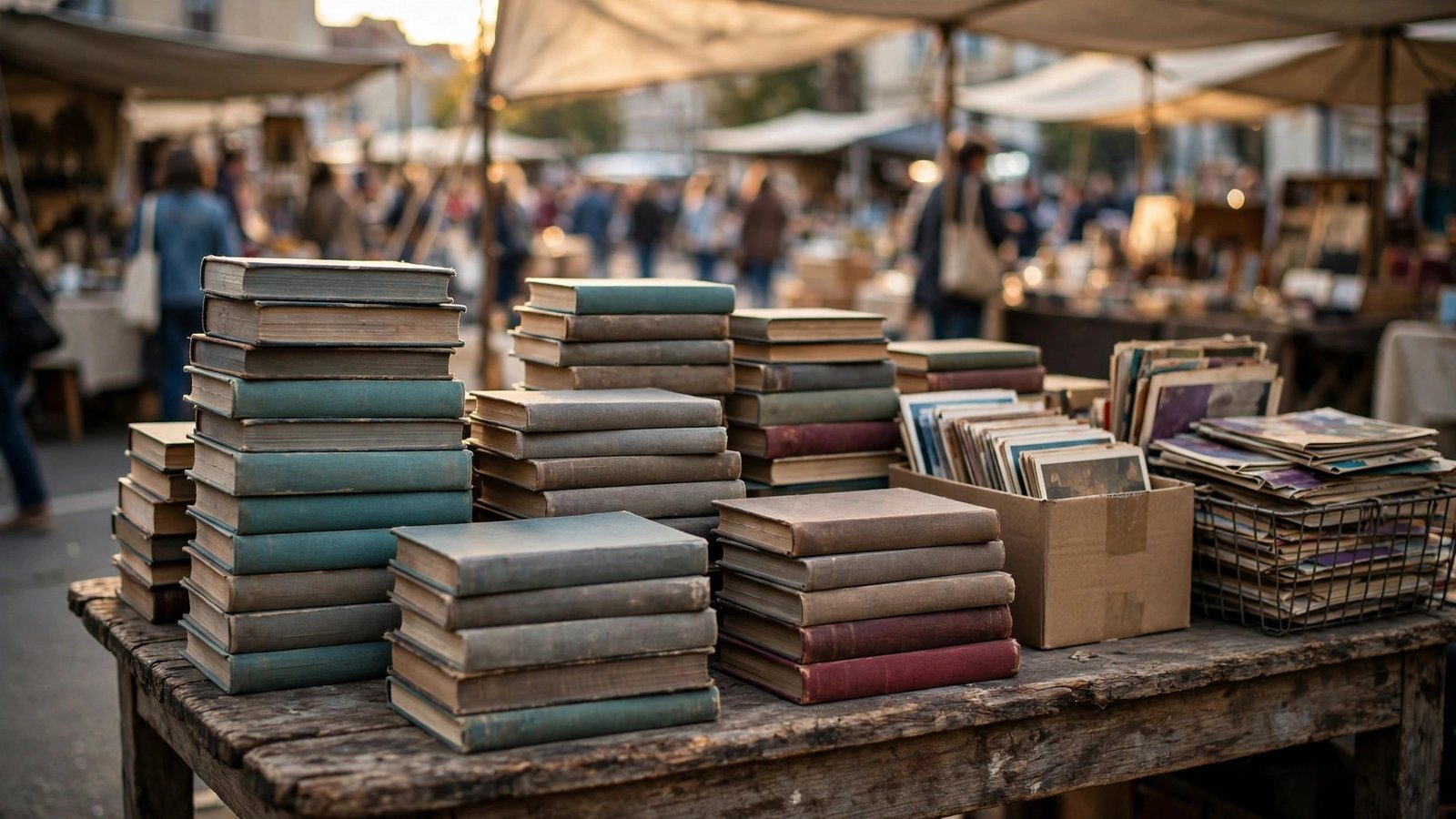
The single best thrift store find is a sturdy old hardcover book — convert it directly into a journal base by removing or covering the text block. Our tutorial on how to make a junk journal from an old book shows how. Look for cloth bindings, embossed titles, and attractive typography. Open it flat: a firm hinge is gold, a cracking spine means repair work.
2. Ledgers, Journals, and Old Planners
Handwritten ledgers, accounting books, farm logs, and old diaries are top-tier thrifted ephemera — faded ink handwriting is one of the most coveted journal backgrounds. Partially used notebooks with thick, cream-colored paper make perfect signatures.
3. Vintage Postcards
Postcards are cheap and endlessly useful as journal cards, tuck spots, and collage layers. Written ones beat blank ones — handwriting and postmarks add story. Check the card racks, stationery section, and grab-bag bins; whole bundles are usually cheaper per card than singles.
4. Sheet Music
Sheet music offers aged paper, elegant typography, and graphic notation that looks beautiful torn or layered. Hymnals and piano music books are the most common finds at a dollar or two. Framed single sheets are usually overpriced — the books are the better deal.
5. Vintage Photographs and Documents
Old photos, letters, certificates, and receipts sell for pennies and add irreplaceable authenticity. Sealed diplomas and calligraphed certificates make striking focal pages. Be respectful — these were someone’s memories — but rescued ephemera gets a second life instead of a landfill.
6. Fabric Scraps, Lace, and Doilies
The linens and sewing section is a goldmine: lace trim, embroidered handkerchiefs, doilies, vintage tablecloths, ribbon on cards. Natural fibers in cream, ivory, and faded pastels are the most versatile; mixed-lace bundles are the best value.
7. Old Office Supplies
Carbon paper, typewriter paper, onion-skin airmail paper, file folders, index cards, vintage envelopes, and brass fasteners all belong in your cart. Old business envelopes are perfect for making pockets and tucks.
8. Old Calendars, Magazines, and Catalogs
Vintage magazines, seed catalogs, and wall calendars are image banks for fussy cutting. Flip through first — seed catalogs and old nature magazines are the classics.
9. Old Maps, Atlases, and Globes
Torn maps, old road atlases, and classroom globes give journals a travel or vintage-science feel. Atlas pages work as full page backgrounds or folded inserts — check the book section and the decor aisle.
10. Buttons, Keys, Jewelry, and Small Hardware
Button tins, old keys, broken jewelry, and odd hardware are perfect for journal closures, charms, and embellishments. Mixed lots beat singles on price; old skeleton keys and small brass padlocks are closure favorites.
What to Skip
- Moldy or water-damaged paper. A musty basement smell means mold, and mold spreads to your other supplies. If it smells off, leave it.
- Glossy modern magazines. They look cheap in a vintage-style journal, and the coating resists glue and ink.
- Overpriced “vintage” items. Some thrift stores price old books like antiques. Know your benchmarks (below) and walk away when the price is wrong.
- Paper that crumbles. Gently bend a corner — if it snaps, it will disintegrate no matter how carefully you handle it.
- Anything you don’t love. Thrifting works because the finds excite you. A bag of “maybe” supplies just becomes clutter.
Price Benchmarks: What to Actually Pay
- Old hardcover books: 50 cents to 2 dollars. More than 3 dollars is overpaying unless the binding is exceptional.
- Sheet music books and hymnals: 50 cents to 2 dollars. Individual framed sheets at 5 dollars and up are usually a bad deal.
- Postcards: 10 to 50 cents each, or grab the whole bundle if the per-card price drops under 25 cents.
- Lace and fabric bundles: 1 to 4 dollars per bag. A bag that is mostly polyester is not worth it.
- Ledgers and handwritten journals: 1 to 3 dollars. Handwritten pages are irreplaceable, so these are worth a little more.
- Old keys, buttons, and hardware lots: 50 cents to 2 dollars for a mixed lot.
- Vintage photos and documents: 10 to 50 cents each.
The cardinal rule: if it feels expensive, it is. Thrift stores restock constantly, and another copy — or something better — will come along. Patience is the thrifter’s superpower.
Where to Go: Beyond the Thrift Store
Thrift Stores
Charity shops are the bread and butter. Visit regularly — inventory turns over fast and the best finds go within days. Ask staff about restock days, and watch for color-tag or senior/student discount days.
Flea Markets
Flea market junk journal finds reward early birds. Dealers bundle paper goods into “ephemera lots” priced to move, especially near closing when they’d rather sell than pack up. The last hour is haggling hour — a polite lower offer on a bundle often works.
Estate Sales
Estate sales are the deep end: whole households of paper history. Check desks, attics, and basement boxes for letters, ledgers, and photos. Arrive early for the best paper goods, or on the final half-price day.
Garage and Yard Sales
Garage sales are the cheapest source because sellers just want the boxes gone. Ask about old books, papers, or sewing supplies — people often bring out boxes they hadn’t planned to sell.
Library Sales
Friends-of-the-library sales are the best-kept secret for cheap vintage books for journals. Ex-library discards and donated books go for a dollar or less, often by the bag on the last day.

Cleaning and Prepping Your Thrifted Finds
- Quarantine first. Keep new finds separate from your stash for a few days and check for bugs or mold, especially books.
- Wash fabrics. Lace, doilies, and linens go through a gentle wash with mild detergent, then air dry.
- Wipe hardcovers. A barely damp cloth with a drop of mild soap cleans dusty covers. Dry immediately — never soak.
- Air out paper. Musty-but-not-moldy paper can be aired outside on a dry day or sealed in a bin with baking soda for a few days.
- Freeze paper goods. A sealed bag in the freezer for 48 hours kills paper-loving pests. Let items reach room temperature before opening the bag.
- Trim and flatten. Press warped pages under heavy books for a day or two before using them.
Thrifting Etiquette for Junk Journalers
Don’t tear pages out of books in the store to “test” them — that ruins the item for everyone. Take what you will use and leave the rest for other crafters. At estate sales, remember you are walking through someone’s life.
Key Takeaways
- The best thrift store finds for junk journals are old hardcover books, handwritten ledgers, vintage postcards, sheet music, aged documents, lace and fabric scraps, and old office supplies.
- Thrifting beats craft stores on price and authenticity — real aged patina cannot be bought in a paper pack.
- Know your price benchmarks: most paper goods should cost under 2 dollars, and walking away from overpriced items is a skill.
- Expand beyond thrift stores to flea markets, estate sales, garage sales, and library sales for the best finds.
- Always clean and quarantine thrifted finds — wash fabrics, air out paper, and freeze paper goods to kill pests.
- Skip moldy, water-damaged, or crumbling items no matter how tempting; one bad find can contaminate your whole stash.
Love vintage ephemera but short on thrift finds? Shop my printable vintage ephemera and clipart kits at Etopica on Etsy — instant-download collections with commercial use, perfect for filling your junk journals when the thrift shelves come up empty.
Frequently Asked Questions
What are the best thrift store finds for junk journals?
The best thrift store finds for junk journals are old hardcover books (for altered-book journal bases), handwritten ledgers, vintage postcards, sheet music, old photographs and documents, lace and fabric scraps, and vintage office supplies like envelopes and carbon paper. They are inexpensive and already have the authentic aged look junk journalers want.
How much should I pay for thrifted junk journal supplies?
Most thrifted paper goods should cost under 2 dollars: hardcover books 50 cents to 2 dollars, postcards 10 to 50 cents each, sheet music books 50 cents to 2 dollars, and lace bundles 1 to 4 dollars. If an item feels overpriced for a thrift store, walk away — inventory turns over quickly and a better deal will come along.
Is it okay to cut up old books for junk journals?
Yes, with judgment. Mass-produced books with no collector value — old encyclopedias, dated textbooks, worn novels — are ideal for altered-book journals. Avoid rare, signed, first-edition, or historically significant books; check the publication info before committing. When in doubt, look the title up quickly.
How do I clean thrifted paper and ephemera?
Quarantine new finds away from your stash and inspect for mold or pests. Wash lace and fabrics gently, wipe hardcovers with a barely damp cloth, and air out musty paper outdoors or with baking soda in a sealed bin. Freezing paper goods in a sealed bag for 48 hours kills paper pests. Discard anything moldy or water-damaged.
Where else can I find cheap vintage ephemera besides thrift stores?
Flea markets, estate sales, garage sales, and library book sales are all excellent — often cheaper than thrift stores. Flea markets reward early birds and end-of-day haggling, estate sales are best on the final half-price day, garage sales often have free boxes, and library sales sell old books for a dollar or less.
What should I avoid buying at thrift stores for junk journals?
Skip anything moldy, water-damaged, or smelling strongly musty, as mold spreads to other supplies. Avoid glossy modern magazines, extremely brittle paper that crumbles when bent, and anything priced like an antique. Also skip items you don’t genuinely love — “maybe” supplies become clutter.
Can I really make a whole junk journal from thrift store finds?
Absolutely. Many junk journalers build entire journals from thrifted materials: an old hardcover as the base, ledger and sheet music pages as signatures, postcards and photos as journal cards, lace and buttons as embellishments. See our guide on making a junk journal from an old book, and 10 junk journal supplies you already have at home for free additions.
What are the best thrift store finds for junk journals?
Old hardcover books (for altered-book journal bases), handwritten ledgers, vintage postcards, sheet music, old photographs and documents, lace and fabric scraps, and vintage office supplies like envelopes and carbon paper.
How much should I pay for thrifted junk journal supplies?
Most thrifted paper goods should cost under 2 dollars: hardcover books 50 cents to 2 dollars, postcards 10 to 50 cents each, sheet music books 50 cents to 2 dollars, and lace bundles 1 to 4 dollars.
Is it okay to cut up old books for junk journals?
Yes, with judgment. Mass-produced books with no collector value — old encyclopedias, dated textbooks, worn novels — are ideal for altered-book journals. Avoid rare, signed, first-edition, or historically significant books.
How do I clean thrifted paper and ephemera?
Quarantine new finds away from your stash and inspect for mold or pests. Wash lace and fabrics gently, wipe hardcovers with a barely damp cloth, air out musty paper, and freeze paper goods in a sealed bag for 48 hours to kill pests.
Where else can I find cheap vintage ephemera besides thrift stores?
Flea markets, estate sales, garage sales, and library book sales are all excellent — often cheaper than thrift stores. Flea markets reward early birds and end-of-day haggling, estate sales are best on the final half-price day, and library sales sell old books for a dollar or less.
What should I avoid buying at thrift stores for junk journals?
Skip anything moldy, water-damaged, or smelling strongly musty, as mold spreads to other supplies. Avoid glossy modern magazines, extremely brittle paper, and anything priced like an antique.
Can I really make a whole junk journal from thrift store finds?
Absolutely. Many junk journalers build entire journals from thrifted materials: an old hardcover as the base, ledger and sheet music pages as signatures, postcards and photos as journal cards, and lace and buttons as embellishments.
Our Etsy shop is full of adorable printable cliparts — birthday boys & girls, sweet animals, summer and spring themes — designed to print at home and layer straight into your journal.
Browse the Clipart Shop ↗
Leave a Reply