What Is a Junk Journal Kit?
A junk journal kit is a coordinated set of papers and embellishments designed to fill the pages of a junk journal, and it comes in two forms: a digital junk journal kit (printable PDF or JPG files you download and print at home) or a physical kit (a box or bundle of real pre-cut papers shipped to your door). The difference is simple — digital kits trade instant access and unlimited reprints for printer work, while physical kits trade higher cost for ready-to-use pieces you can glue in immediately. Either way, the point of a kit is the same: instead of hunting down mismatched papers one by one, you start with a matched collection that already looks beautiful together.
If you are new to the craft, this is one of the fastest ways to get past the blank-page panic: a good junk journal starter kit removes the two hardest beginner problems at once — finding enough interesting material, and making it all look cohesive. Below you will learn exactly what goes inside a typical kit, how digital and physical kits compare on cost and quality, how to choose the right one, and the question every beginner asks — whether you can sell journals made with kit pieces.
If you have not made your first journal yet, start with our beginner walkthrough first: How to Start a Junk Journal. Once you understand the basic structure, kits become much easier to evaluate.
What Comes Inside a Typical Junk Journal Kit
Before comparing digital and physical kits, it helps to know what you are actually buying. Most kits, digital or physical, include some combination of these coordinated pieces, all in one theme or colour palette such as vintage botanical, French cafe, or shabby chic:
- Journal pages: aged or decorated background sheets that become the actual pages of your journal, often 10–30 designs.
- Tags and labels: shipping tags, file-folder tabs, library cards, and small labels for pockets and tuck spots.
- Ephemera pieces: the decorative extras — ticket stubs, postage stamps, ledger scraps, butterflies, birds, keys, and other cut-apart images.
- Envelopes and pockets: small coin envelopes, glassine bags, or pocket pages that hold journaling cards and mementos.
- Journaling cards: lined or blank cards for writing memories, quotes, and notes.
- Borders and trims: strips, banners, and frames that decorate page edges.
The key word is coordinated. This is what separates a kit from a random pile of generic printables: every piece shares a colour story and vintage finish, so anything you pull out of the set works with everything else. That is why kits are so popular with beginners — the design decisions are already made for you.
Wondering how to actually fill a journal once you have materials? See our What to Put in a Junk Journal guide for dozens of placement ideas.
Digital (Printable) Junk Journal Kits: How They Work
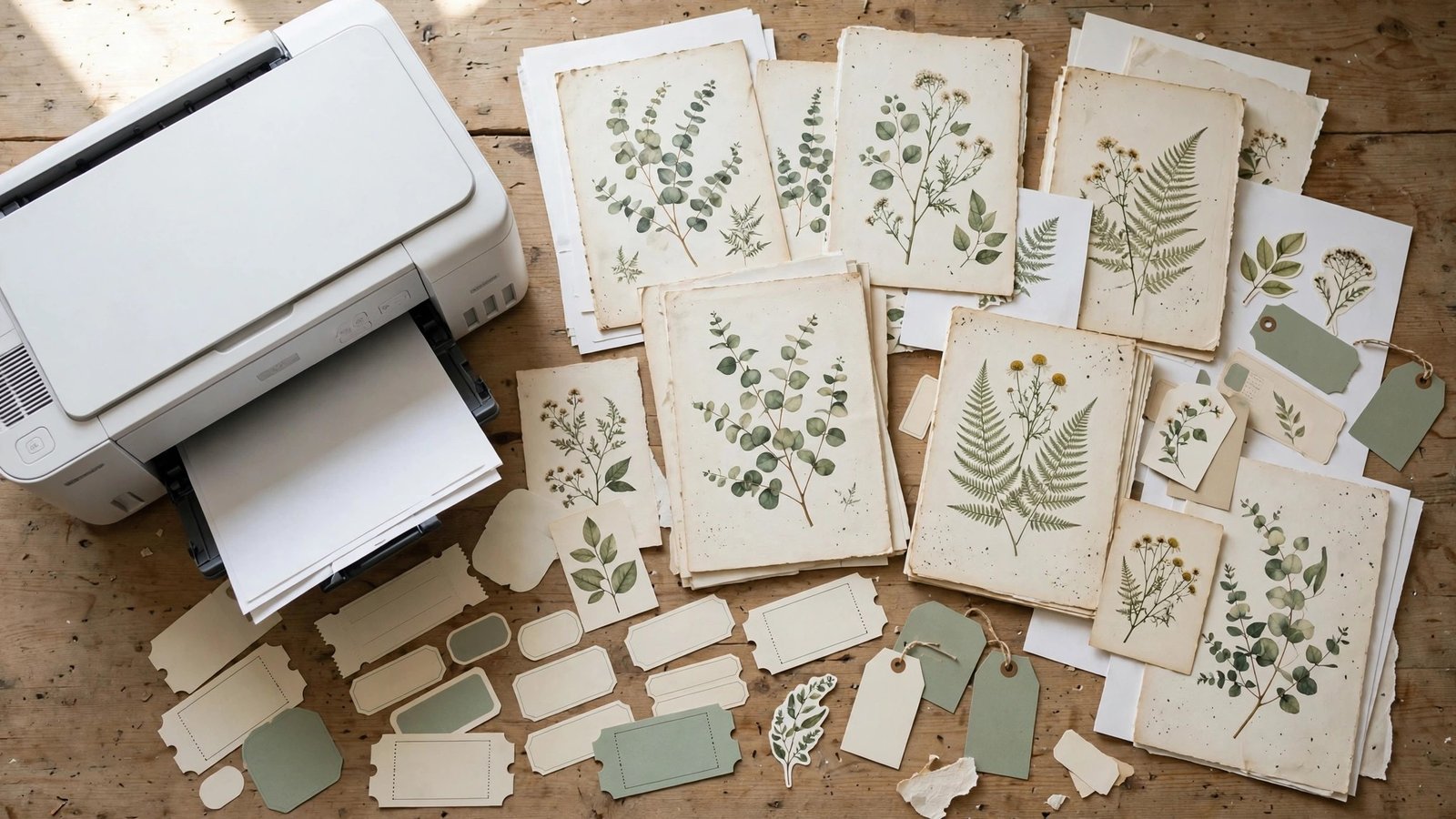
A digital junk journal kit is a set of downloadable files — usually PDFs or high-resolution JPGs — that you buy once, download instantly, and print at home whenever you need pieces. Most sellers deliver the files through Etsy or their own shop within minutes of purchase, and you keep them forever.
- Buy and download: purchase the kit, save the files to your computer or tablet.
- Choose your paper: load your printer with plain copy paper, cardstock for sturdy tags, or kraft paper for a rustic look.
- Print what you need: print the pages and ephemera at 100% scale; reprint any sheet as many times as you like.
- Cut and distress: fussy-cut the ephemera, ink the edges with a distress ink pad, and assemble.
Pros of digital kits: instant download with no shipping wait, very affordable ($3–$10 per kit), unlimited reprints so one kit can fill many journals, and you control the paper type and size.
Cons of digital kits: you need a working printer and ink, printing costs add up over time, home prints look flatter than professionally printed papers, and there is cutting and prep work before you can create.
Physical (Pre-Made) Junk Journal Kits: What You Get
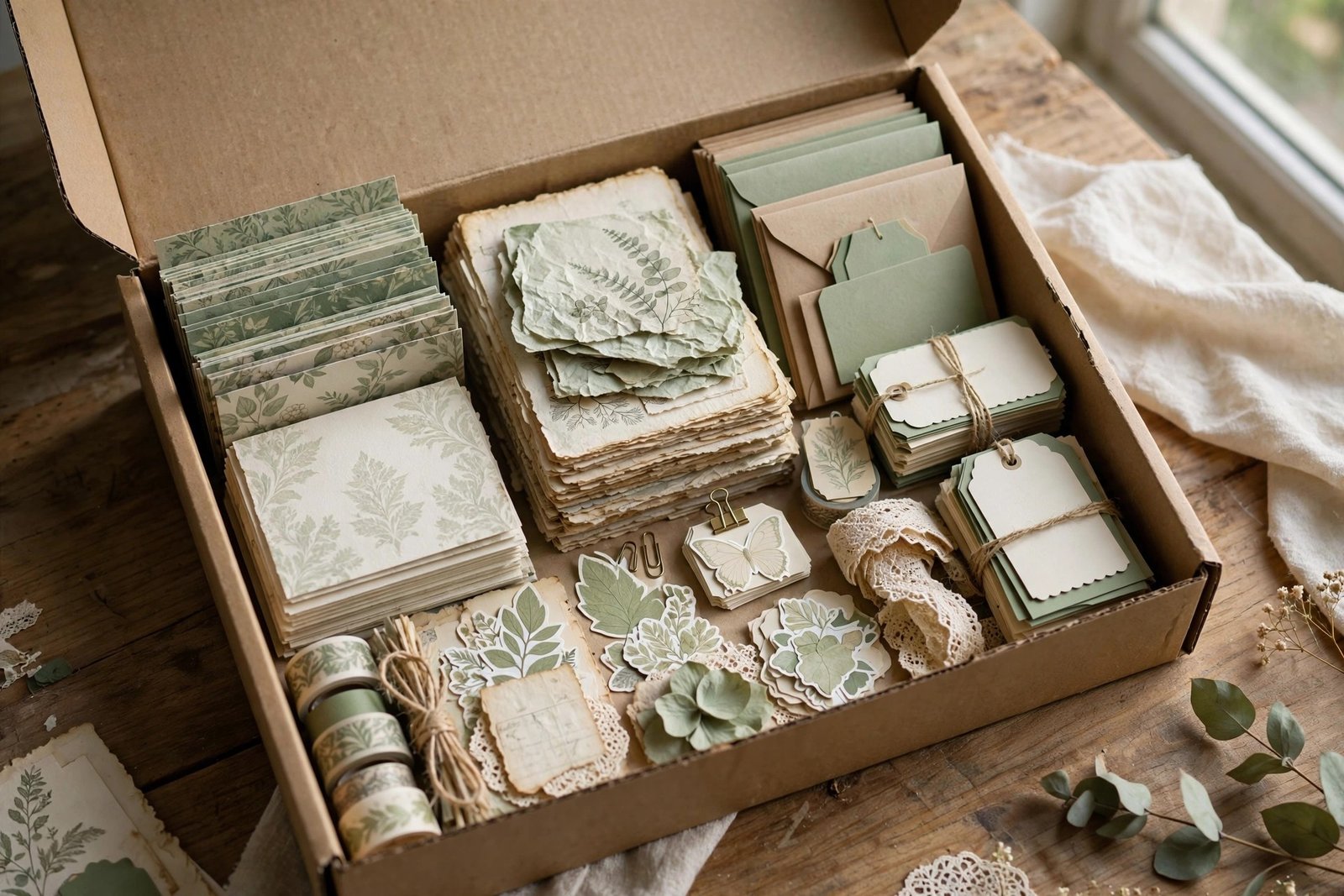
A physical junk journal kit is a box or bundle of actual paper pieces — printed, cut, and sometimes pre-assembled — shipped to your door, so you can start gluing within minutes, from simple paper bundles to elaborate kits with fabric, lace, and charms.
Pros of physical kits: zero prep work (everything is printed and cut for you), professional print quality and genuine aged-paper textures, tactile extras like fabric and ribbon that home printers cannot produce, and a delightful unboxing experience.
Cons of physical kits: much higher cost (typically $25–$60+), shipping time and fees, one-time use (once a piece is glued in, it is gone), and you are limited to what the seller included — no reprinting your favourites.
Digital vs Physical: The Side-by-Side Comparison
- Price: Digital $3–$10 per kit (plus your ink and paper); physical $25–$60+ including shipping.
- Speed: Digital is instant — download and print tonight. Physical takes 3–14 days to arrive.
- Reusability: Digital files print unlimited times. Physical pieces are one-and-done.
- Print quality: Physical wins on texture and colour depth; good home printers come close on paper you choose yourself.
- Effort: Physical is grab-and-glue. Digital needs printing, cutting, and edge-inking.
- Storage: Digital kits live on your hard drive forever. Physical kits need shelf space.
- Gifting: Physical kits make wonderful gifts for crafty friends; digital kits are harder to gift.
How to Choose the Right Kit: A 5-Step Decision Guide
Step 1: Check Your Printer Situation
If you own an inkjet or laser printer (or have easy access to one), a digital junk journal kit is almost always the better value. If you have no printer and no plans to buy one, go physical — the cost of a new printer plus ink outweighs the savings of digital kits for your first few journals.
Step 2: Set Your Budget
Under $15 total? Digital kit + your existing paper stock wins easily. Willing to spend $30–$50 for a premium ready-to-craft experience? A physical junk journal starter kit delivers more tactile luxury for the money.
Step 3: Decide How Many Journals You Want to Make
One kit, one journal? Either format works. But if you plan to make several journals — or sell them (see below) — a printable junk journal kit is far more economical, because you can reprint the same pages endlessly.
Step 4: Match the Theme to Your Journal
Pick a kit whose palette matches the story you want to tell: botanical greens for a nature journal, sepia for a heritage album, pastels for a spring diary. A mismatched kit gathers dust; a matched one practically assembles itself.
Step 5: Read the Licence Before You Buy
This matters more than most beginners realise. Check whether the kit allows personal use only or also commercial use — especially if you ever want to sell your finished journals. The commercial-use rules are explained in plain English in the next section.

Commercial Use Explained: Can You Sell Journals Made With Kit Pieces?
This is the number-one question beginners ask about junk journal kits, and the answer is: it depends on the kit’s licence — always read it before buying.
In plain English, here is how licensing usually works:
- Personal use only: make journals for yourself and as gifts, but do not sell them — the most common licence for cheap digital kits.
- Limited commercial use: sell finished physical journals incorporating the kit pieces, usually up to a limit (e.g. 100–200 end products) — the licence most journal-makers need.
- Extended commercial use: higher or unlimited sales limits for finished products, sometimes at a higher price tier.
- Never allowed (almost always): reselling, sharing, or giving away the digital files themselves, as-is or modified.
The crucial distinction: selling your handmade journal that contains kit pieces is completely different from selling the kit files. Most reputable sellers of commercial use junk journal kits explicitly allow the first and forbid the second. If a listing does not mention commercial use, assume personal use only and message the seller before buying — and keep a screenshot of the licence terms with your receipt.
Pairing kit pieces with digital cliparts in your junk journal works under the same rules — the clipart’s licence governs what you can do with finished journals you sell.
Key Takeaways
- A junk journal kit is a coordinated set of themed pages, tags, ephemera, and envelopes — digital kits are downloaded and printed at home, physical kits arrive ready to use.
- Digital (printable) junk journal kits cost $3–$10, download instantly, and reprint forever — but you need a printer and prep time.
- Physical kits cost $25–$60+, need no prep, and feel more luxurious — but each piece can only be used once.
- Choose based on five factors: your printer, your budget, how many journals you plan to make, theme match, and the licence terms.
- You can sell finished journals made with kit pieces only if the kit’s licence allows commercial use — selling or sharing the digital files themselves is never allowed.
Looking for printable kits to start with? Our own Etsy shop, Etopica, stocks printable vintage ephemera and clipart kits — coordinated junk journal kits with commercial use included, so you can print endlessly and even sell the journals you make. Browse the kits at etsy.com/shop/Etopica and find a theme you love.
Frequently Asked Questions
What is a junk journal kit?
A junk journal kit is a coordinated collection of themed papers and embellishments — journal pages, tags, ephemera, envelopes, and journaling cards — designed to be bound into a junk journal. Unlike random printables, every piece shares a matching palette and style, so your journal looks cohesive from the first page.
What is the difference between a digital junk journal kit and a physical one?
A digital junk journal kit is downloadable files (PDF or JPG) you print at home as many times as you like — cheap, instant, and reusable. A physical kit is a box of real pre-printed, pre-cut papers shipped to you — more expensive and one-time use, but ready to glue immediately with richer textures and tactile extras like lace.
What is usually inside a junk journal starter kit?
Most junk journal starter kits include decorated journal pages, shipping tags and labels, fussy-cut ephemera (stamps, tickets, botanicals), small envelopes or pockets, journaling cards, and border strips — all in one coordinated theme. Physical kits may also add fabric scraps, ribbon, charms, or a pre-made cover.
Are printable junk journal kits cheaper than physical kits?
Yes, significantly. A printable junk journal kit typically costs $3–$10 plus ink and paper, while a physical kit runs $25–$60+ with shipping. If you make more than one journal, digital kits are far cheaper per journal because the files can be reprinted unlimited times.
What printer and paper do I need for a digital junk journal kit?
Any home inkjet or laser printer works. Print background pages on 80–100 gsm copy paper, sturdy pieces like tags on 160–200 gsm cardstock, and try kraft paper for a rustic feel. Use 100% scale and your printer’s best-quality setting for the richest colours.
Can I sell junk journals made with kit pieces? What does commercial use mean?
You can sell finished journals made with kit pieces only if the kit’s licence allows commercial use — many digital kits are personal-use only, so check before buying. “Commercial use” means you may sell physical end products (your handmade journals) incorporating the designs, usually up to a stated limit. What you can never do is resell, share, or give away the kit’s digital files themselves.
Which kit should a complete beginner buy first?
If you own a printer, start with an affordable printable junk journal kit in a theme you love — it is low-risk and reusable. If you have no printer, buy a small physical junk journal starter kit so you can start creating immediately. Either way, pick a kit with a commercial-use licence if you think you might ever sell your journals.
What is a junk journal kit?
A coordinated collection of themed papers and embellishments, journal pages, tags, ephemera, envelopes, and journaling cards, designed to be bound into a junk journal. Unlike random printables, every piece shares a matching palette and style, so your journal looks cohesive.
What is the difference between a digital junk journal kit and a physical one?
A digital kit is downloadable files you print at home as many times as you like, cheap, instant, and reusable. A physical kit is a box of real pre-printed papers shipped to you — more expensive and one-time use, but ready to glue immediately with richer textures.
What is usually inside a junk journal starter kit?
Decorated journal pages, shipping tags and labels, fussy-cut ephemera (stamps, tickets, botanicals), small envelopes or pockets, journaling cards, and border strips — all in one coordinated theme.
Are printable junk journal kits cheaper than physical kits?
Yes, significantly. A printable kit costs $3–$10 plus ink and paper, while a physical kit runs $25–$60+ with shipping.
What printer and paper do I need for a digital junk journal kit?
Any home inkjet or laser printer works. Print background pages on 80–100 gsm copy paper, sturdy pieces like tags on 160–200 gsm cardstock, at 100% scale and best-quality setting.
Can I sell junk journals made with kit pieces? What does commercial use mean?
You can sell finished journals made with kit pieces only if the kit’s licence allows commercial use — many digital kits are personal-use only, so check before buying. Commercial use means you may sell physical end products incorporating the designs, usually up to a stated limit. You can never resell, share, or give away the kit’s digital files themselves.
Which kit should a complete beginner buy first?
If you own a printer, start with an affordable printable kit in a theme you love. If you have no printer, buy a small physical starter kit. Either way, pick a kit with a commercial-use licence if you think you might ever sell your journals.
Our Etsy shop is full of adorable printable cliparts — birthday boys & girls, sweet animals, summer and spring themes — designed to print at home and layer straight into your journal.
Browse the Clipart Shop ↗
Leave a Reply