Junk journaling is the daily practice of filling a handmade book with small pieces of your life: a ticket, a line of writing, a pressed leaf, a list, a photo. It is not a project with a deadline, it is a habit, like a morning cup of tea. This guide is ideas led: themes to keep your pages fresh, spreads that work again and again, a daily habit that actually sticks, and 25 creative ideas to fill your pages every day, so you never sit in front of a blank page for long.
Key Takeaways
- Junk journaling is a daily habit, not a project with a deadline.
- Themes give your pages direction without limiting them.
- Four simple spreads cover most days: a daily page, a weekly spread, a list spread, and a pocket spread.
- Ten minutes a day beats a long session once a month.
- The 25 ideas in this guide work in five minutes or stretch to a full evening.
- A stuck day is normal, and a small page still counts.
What Junk Journaling Looks Like Day to Day
Junk journaling looks different every day, and that is the charm of it. One morning you glue down a train ticket and write two lines about the journey. The next evening you press a leaf, add a date, and close the book. Some days the page is a list, some days it is a photo, and some days it is only a color wash with a single word. The practice is the habit of noticing, and the book is where the noticing lands.
If you are new to the idea, our guide to what junk journaling is explains the basics, and our guide to junk journals shows the shape of the book itself. This guide picks up where those leave off, with the daily practice: how to keep going, what to make, and how to fill a page when the ideas run dry.
The habit has roots in older paper crafts, and the junk journal entry on Wikipedia traces the modern form, while old scrapbooks in the Internet Archive scrapbook collections show the same impulse at work a century ago: ordinary people keeping tickets, clippings, and notes in books of their own. You are joining a long, ordinary tradition, and the only rule is to keep the book close.
Themes That Keep Your Pages Fresh
A theme is a gentle fence, not a cage. It gives you a starting point when the page is blank, and you can step outside it whenever a better idea arrives. Rotate themes through the year, and your book will feel varied without any extra effort.
A theme for each month
Give each month a theme, such as gardens in May, the sea in August, and home in December, and let the pages follow it loosely. A monthly theme makes collecting easy, because you notice things that fit, and it gives a finished book a natural rhythm, one small season at a time.
A theme for each week
A weekly theme is smaller and easier to keep, such as a color, a place, or a person. One week might be all blue pages, another week might be all pages about your street. A week is short enough that a theme never grows stale, and long enough to make a satisfying run of pages.
One word themes
Pick one word for a day, such as rain, patience, or yellow, and build the page round it. A single word is the lightest theme of all, and it works on the busiest days, when you have ten minutes and no plan. Keep a jar of word slips on your desk, and pull one out when the page stays blank.

Spreads Worth Trying
A spread is a pair of facing pages, and a few reliable spreads will carry you through most of the year. Learn these four, and you will always have a page to make, even on a tired evening.
The daily page
One page, one day, one small thing. Glue down the ticket, the label, or the leaf, add the date and two lines, and stop. The daily page is the backbone of junk journaling, because it asks so little and gives so much back when you read it later.
The weekly spread
Open the book flat and use both pages for one week. The left page holds a short list of what happened, and the right page holds the best photo or keepsake. A weekly spread is perfect for busy weeks, when seven small days deserve one calm place together.
The list spread
Lists are the easiest pages of all, and they age beautifully. Books read, meals cooked, walks taken, songs loved, and small kindnesses all make good lists. Use one spread per list, leave room to add to it, and return to it through the month.
The pocket spread
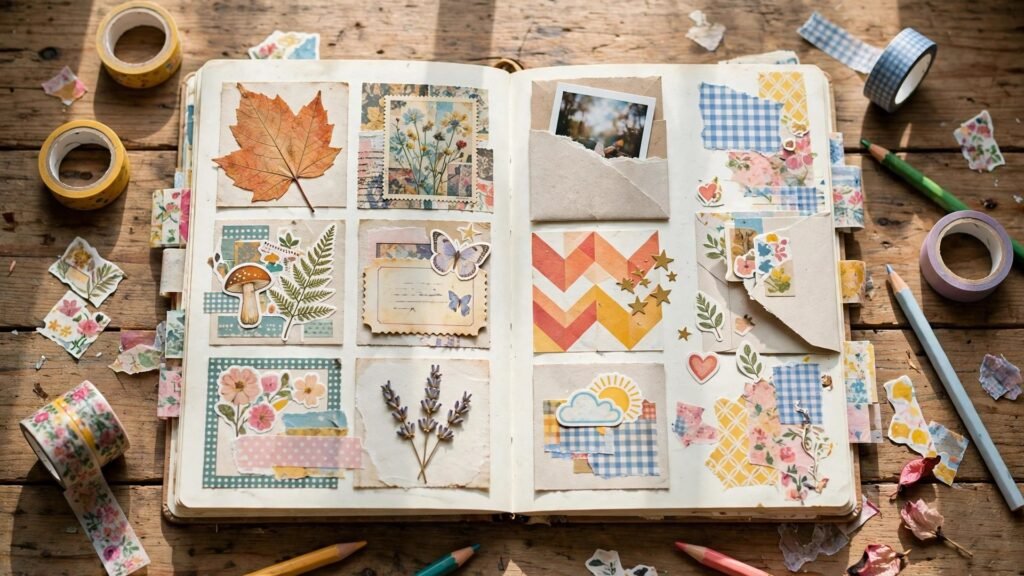
Turn a spread into a home for loose things by gluing an envelope or a folded pocket to each page. Tickets, notes, and dried flowers live there until you have time to write about them. A pocket spread is a kind of inbox, and it keeps the book honest about real life.
A Daily Habit That Actually Sticks
Most junk journals fail quietly, not because the maker loses interest, but because the habit never found a home in the day. A habit needs a time, a place, and a low bar, and once those three are set, the pages almost make themselves.
Pick a time, not a mood
Choose a fixed time, such as after breakfast or before bed, and sit with the book then, whether you feel inspired or not. Moods are unreliable, but a time on the clock is not. Ten minutes at the same time each day builds a stronger habit than an hour whenever you feel like it.
Keep supplies ready
Keep the book open on the desk, with a glue stick, scissors, and a pen beside it, so starting takes seconds. If the supplies live in a cupboard, the habit dies in the cupboard too. A small tray by your chair holds enough for a daily page, and the full kit can stay on the shelf.
Small pages count
A page with one ticket and a date is a finished page, and a week of small pages beats one grand page a month. When you are tired, make the smallest page you can, and close the book with a clear conscience. The habit matters more than the page, and the pages add up fast.
25 Creative Ideas to Fill Your Pages
Use these ideas in any order, and repeat the ones you love. Each idea fits on one page or one spread, and most take less than thirty minutes.
Five minute ideas
- Glue down one ticket or receipt, add the date, and write one line about the day it came from.
- Stick a strip of washi tape across a blank page, write a single word on it, and call the page done.
- Press a leaf or a petal onto a page with a dot of glue, and write the place you found it.
- Write a three line list of things you can hear right now, and date it.
- Tear a scrap of pretty paper, glue it to a corner, and add a small doodle beside it.
Memory ideas
- Make a page about a childhood meal, with a handwritten recipe and a memory of who cooked it.
- Glue down a photo of a friend, and write three things you love about them.
- Record the firsts of the year: first snow, first flower, first picnic, with a date for each.
- Write a letter to a place you miss, on a page with a map scrap or a postcard from there.
- Keep a page of overheard words, funny things strangers said, with the date and the place.
Nature and season ideas
- Collect one leaf each week in autumn, glue it down, and note the color and the tree.
- Make a spring page with a seed packet, the sowing date, and a line about the weather.
- Press a summer flower between pages, then glue it down with the name of the garden.
- Build a winter page with a white paper snowflake, a scrap of ribbon, and a line about the cold.
- Sketch the view from your window in four colors, and write the time of day beneath it.
List ideas
- List ten books you want to read, and tick each one off with the date you finish it.
- Make a list of meals that comfort you, with one line on who taught you each one.
- Keep a list of walks you love, with the distance, the best view, and the nearest bakery.
- Write a list of songs for rainy days, and add one new song each week.
- List small kindnesses you received this month, and who gave each one.
Art and color ideas
- Paint a page with one watercolor color, let it dry, and write a single sentence across it.
- Make a collage from torn magazine pages in one color, and add a found word on top.
- Stamp a row of shapes with a bottle cap, then fill the gaps with dots in a second color.
- Draw a border of simple flowers round a blank page, so tomorrow has a ready frame.
- Rub a crayon over a leaf under the page, and write the name of the tree beside the print.

When You Feel Stuck
Every junk journaler meets a blank page that stays blank, and the stuck feeling is normal, not a sign to stop. The fix is almost always to make the page smaller: one ticket, one word, one leaf, and the page is done. A tiny page keeps the habit alive, and tomorrow the ideas usually return on their own.
If small pages do not help, change the scene instead of the craft. Move to another chair, open the book at a random page, or copy a page you made last month with new materials. A stuck week is also a good time to sort your paper box, because handling old scraps often sparks the next page. If you want a gentler creative habit to pair with this one, our guide to art journaling offers color and collage pages that mix happily with junk journal pages.
Frequently Asked Questions
What is junk journaling?
Junk journaling is the daily practice of filling a handmade book with small pieces of your life: tickets, notes, photos, lists, and pressed leaves. It is a habit, not a project, and ten minutes a day is enough to keep it going.
How much time does junk journaling take each day?
Ten minutes is enough for most days: glue down one keepsake, add the date and a line or two, and close the book. Longer sessions are lovely on quiet weekends, but the habit is built on short daily pages.
What is the difference between junk journaling and art journaling?
Junk journaling builds a book from collected papers, pockets, and keepsakes, and the joy is in gathering and remembering. Art journaling makes the page itself the artwork, with paint, ink, and collage worked directly on the paper. Many makers enjoy both.
Do I need a finished page every day?
No. A page with one ticket and a date is finished, and some days a single word is enough. The habit matters more than the page, and a week of small pages adds up to a book you will love reading later.
What do I do with a full junk journal?
Label the cover with the theme and the dates, and put it on a shelf where you can reach it. Start the next book at once, while the habit is warm, and return to the finished one whenever you want to remember a season.
Looking for ready-made vintage pieces? Browse the Etopica shop on Etsy for printable junk journaling ephemera, vintage collage sheets, aged papers, and journal cards that layer beautifully into daily pages.
Our Etsy shop is full of adorable printable cliparts — birthday boys & girls, sweet animals, summer and spring themes — designed to print at home and layer straight into your journal.
Browse the Clipart Shop ↗
Leave a Reply