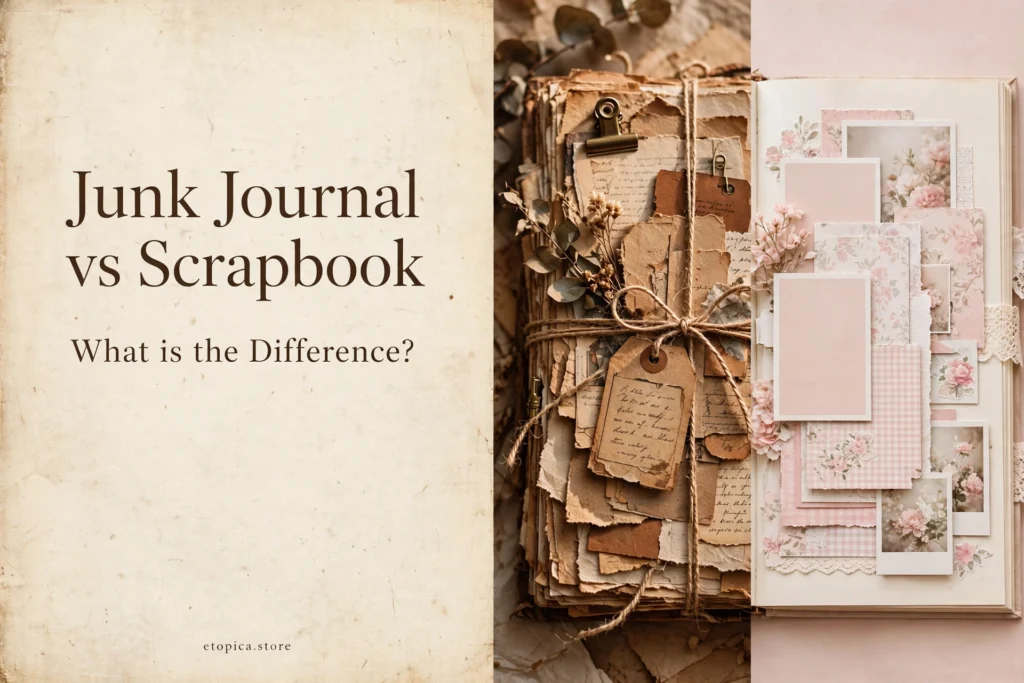
A friendly guide to two beloved paper crafts — and how to tell which one is right for you
If you’ve ever fallen down the rabbit hole of pretty paper crafts online, you’ve probably seen the terms “junk journal” and “scrapbook” used almost interchangeably. They look similar in photos — layered papers, photos, little bits of ephemera tucked everywhere — so it’s no wonder beginners ask: are they the same thing?
They’re not. Junk journals and scrapbooks share the same DNA (paper, glue, memories), but they differ in materials, cost, style, and purpose in ways that really matter once you start. Understanding the difference will save you money, time, and a lot of frustration, because nothing is worse than buying a full set of scrapbooking supplies only to realize you’re actually a junk journal person at heart.
This guide walks you through what each craft is, how they compare across six important dimensions, and, most helpfully, which one you should try first. By the end, you’ll know exactly where you belong in the paper-crafting world.
What is a junk journal?
A junk journal is a handmade book created from “junk” — old book pages, envelopes, packaging, fabric scraps, and found papers — bound together and decorated with collage, pockets, tags, and writing spaces. The charm is in the imperfection: torn edges, mismatched papers, and layers that look collected over time rather than purchased in a kit.
Junk journaling is process-focused. The joy comes from making the book itself — hunting for materials, distressing paper, building pockets — as much as from writing in it afterward. Many junk journals become everyday journals, planners, or memory keepers, but the emphasis is on creativity with what you already have. What Is Junk Journaling?
What is a scrapbook?
A scrapbook is a book designed to preserve and showcase memories — usually photos — on decorated pages. Traditional scrapbooking uses coordinated papers, stickers, die-cuts, and embellishments (often bought as matching collections) to create polished layouts around specific events: birthdays, holidays, vacations, family milestones.
Scrapbooking is memory-focused. The goal is a beautiful, lasting record of your life’s highlights, and the craft has a strong tradition of archival-quality, acid-free materials so pages survive for decades. Modern scrapbooking also includes pocket-style “project life” albums and digital scrapbooking, but the heart of it is the same: your photos, beautifully presented.
Difference 1: Materials — found vs. bought
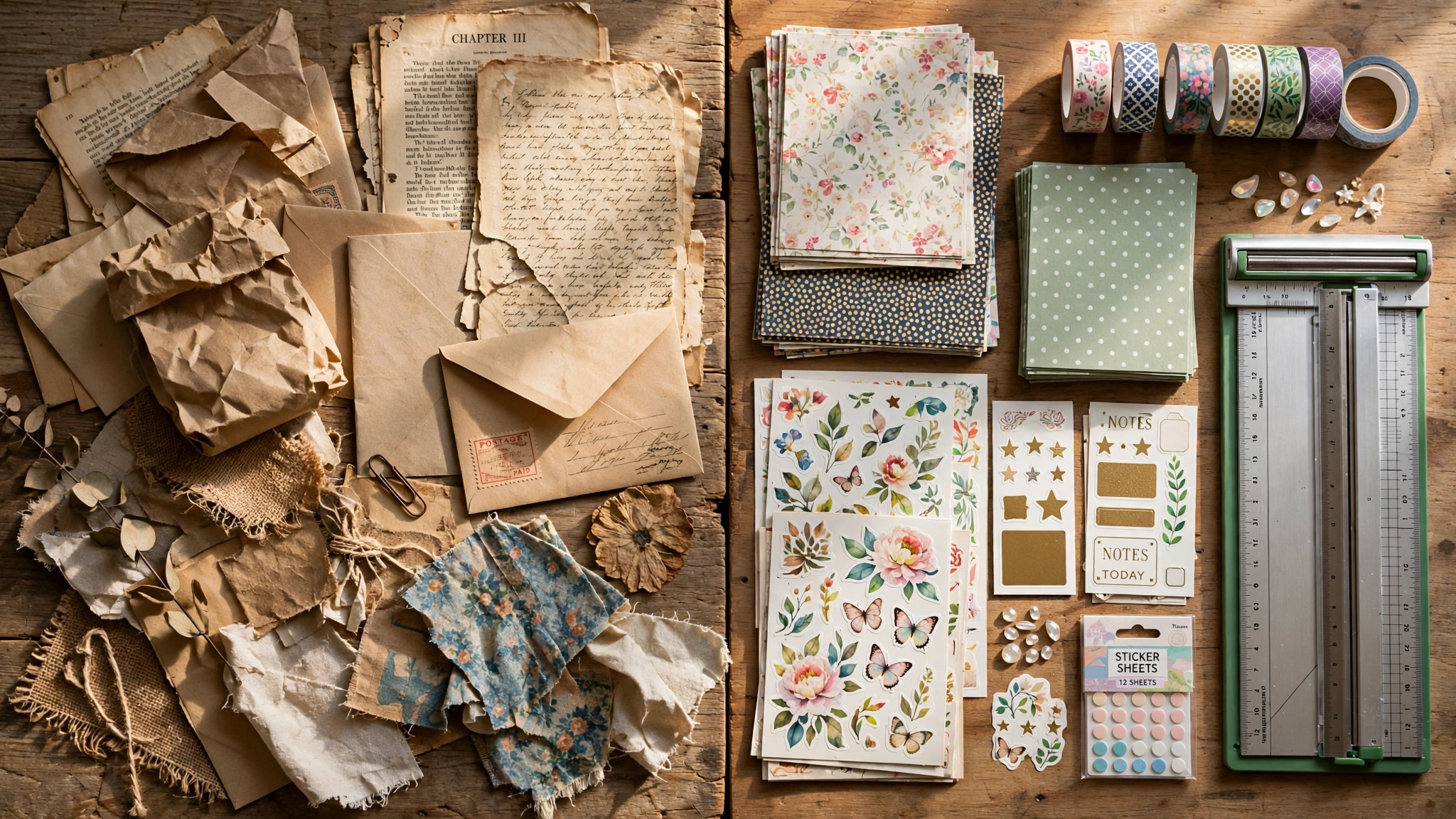
The single biggest difference between the two crafts is where the materials come from.
Junk journaling starts with what you already own. Old books headed for recycling, junk mail, grocery bags, wrapping paper, fabric offcuts, and even packaging become the raw materials. You can absolutely buy pretty papers and printable ephemera too, but the philosophy is “use what you have first.” 15 Best Junk Journal Supplies for Beginners
Scrapbooking typically starts at the craft store. Coordinated paper collections, sticker sheets, washi tape sets, die-cut shapes, and specialty adhesives are the standard toolkit, and most scrapbookers buy materials specifically chosen to match their photos and theme.
Verdict: Junk journals are the craft of found materials; scrapbooks are the craft of chosen materials. If you love thrifting and repurposing, lean junk journal. If you love shopping for matching collections, lean scrapbook.
Difference 2: Cost — nearly free vs. hobby budget
Because junk journals are built from discards, the startup cost can be close to zero. A pair of scissors, some glue, paper you already own, and one old book are genuinely enough to make your first journal. Even when junk journalers do spend money — on printable ephemera, washi tape, or a nice binding — the spending tends to be occasional and modest.
Scrapbooking has a higher entry cost. A basic starter setup (album, paper pack, stickers, adhesive, a trimmer) easily runs $50–$100, and the craft is famous for its tempting product lines — new seasonal collections arrive constantly, and it’s easy to keep buying. Many scrapbookers happily budget for it as an ongoing hobby expense.
Verdict: Junk journaling wins on affordability, especially for beginners testing the waters. Scrapbooking is the pricier hobby, but its fans consider the polished results worth it.
Difference 3: Style — imperfect vs. polished
Junk journals celebrate the handmade and the imperfect. Torn edges, visible glue, crooked stitching, and coffee-stained pages aren’t flaws — they’re the aesthetic. The style ranges from shabby vintage to grungy steampunk to cozy cottagecore, but it always looks touched by human hands.
Scrapbooks aim for polish. Clean cuts, straight lines, balanced layouts, and coordinated colors are the standard. Even “shabby chic” scrapbook pages are carefully composed to look effortlessly pretty. The finished album is meant to impress anyone who opens it, including people who don’t craft.
Verdict: If “perfectly imperfect” sounds like freedom, you’re a junk journaler. If you crave clean, coordinated, frame-worthy pages, scrapbooking will satisfy you more.
Difference 4: Time — quick pages vs. planned layouts
Junk journal pages come together fast. Because there’s no “right” way for a page to look, you can finish a spread in 20–30 minutes of happy experimentation. The low-stakes approach means you actually craft more often — there’s no pressure for every page to be a masterpiece.
Scrapbook layouts take longer. Choosing photos, selecting matching papers, planning the composition, and placing every element precisely can turn one two-page spread into a multi-hour project. Many scrapbookers love this deep, immersive sessions and don’t mind a slower output.
Verdict: Junk journaling fits busy schedules and short attention spans. Scrapbooking suits crafters who enjoy long, immersive sessions and don’t mind a slower output.
Difference 5: Skill level — forgiving vs. technical
Here’s where beginners should pay close attention: junk journaling is one of the most forgiving crafts in existence. There are no rules to break. Crooked cuts look intentional, clashing colors look eclectic, and “mistakes” become design features. You genuinely cannot do it wrong, which makes it ideal for a first paper craft.
Scrapbooking has a gentler learning curve than it looks, but there are still skills to learn — photo cropping, layout composition, color coordination, and journaling placement. Beginners can absolutely start with simple layouts, yet the craft rewards technique in a way junk journaling simply doesn’t require.
Verdict: For a true beginner who wants to start creating tonight with zero anxiety, junk journaling is the easier door in. Scrapbooking is beginner-friendly too, but expect a short learning phase before your pages feel “right.”
Difference 6: Purpose — the process vs. the record
Junk journals are often about the making as much as the keeping. People make them as art journals, daily diaries, travel journals, planners, or just beautiful objects to flip through. The book itself is the star.
Scrapbooks are about the memories they hold. The photos and stories come first; the decoration serves them. A scrapbook’s highest compliment is “what a beautiful record of your family” — it’s a keepsake meant to be shown, shared, and inherited.
Verdict: Ask yourself what excites you more: the idea of making a beautiful book from scraps, or the idea of preserving your photos beautifully. Your answer points to your craft.
Which should you choose? A quick decision guide
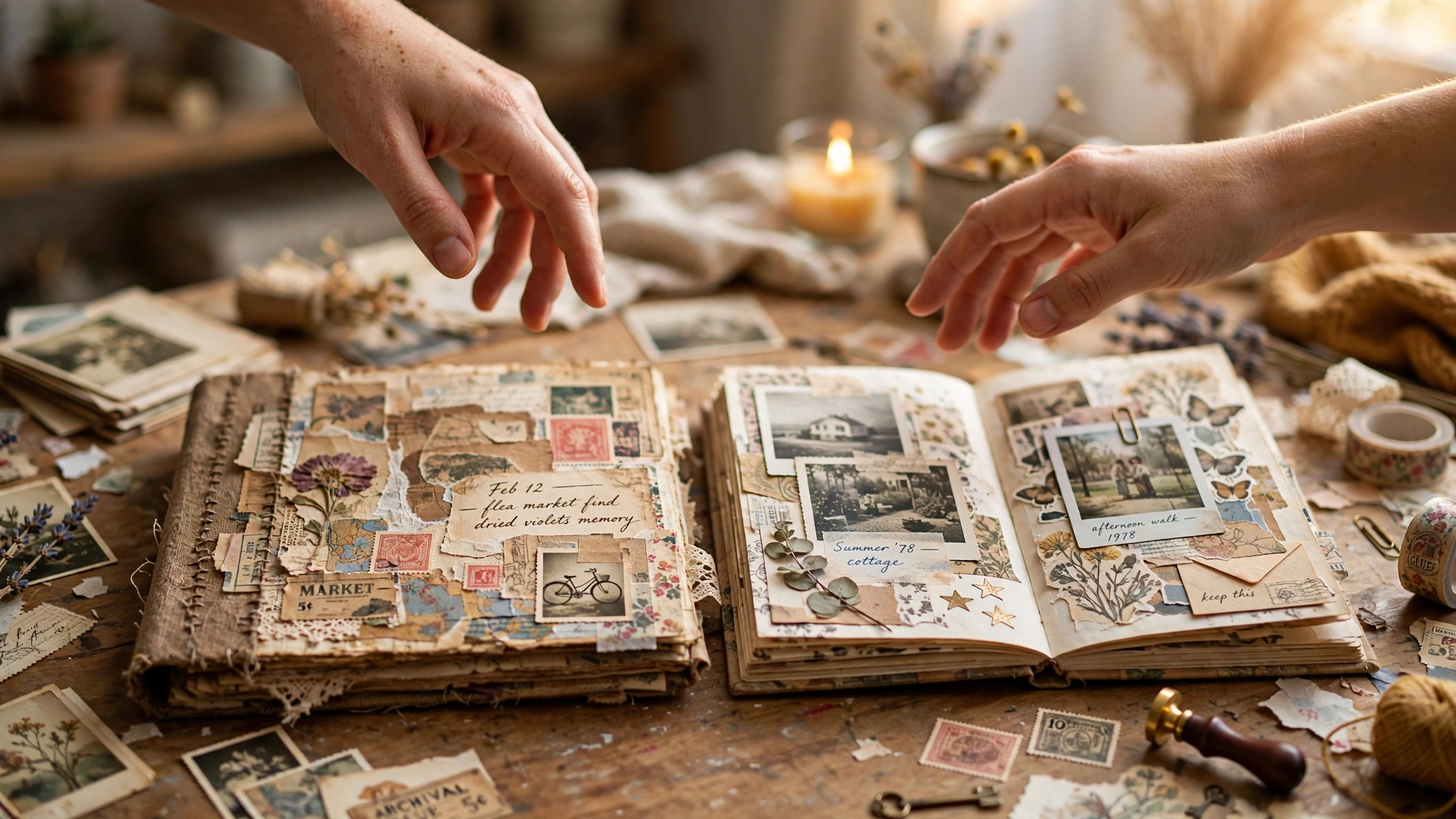
Still torn? Run through these questions:
- Do you have more old papers or more printed photos? Old papers → junk journal. Printed photos waiting for a home → scrapbook.
- Is your budget closer to $0 or $100? Near zero → junk journal. Happy to invest → scrapbook.
- Does “no rules” sound freeing or scary? Freeing → junk journal. Scary → scrapbook’s gentle structure will comfort you.
- Do you want to craft in 30-minute bursts or long weekend sessions? Bursts → junk journal. Long sessions → scrapbook.
And here’s the secret most crafters learn eventually: you don’t have to pick just one forever. Plenty of people keep a junk journal for daily creativity and a scrapbook for family milestones. Start with whichever calls to you loudest — you can always add the other later.
Can you combine both? Absolutely — here’s how
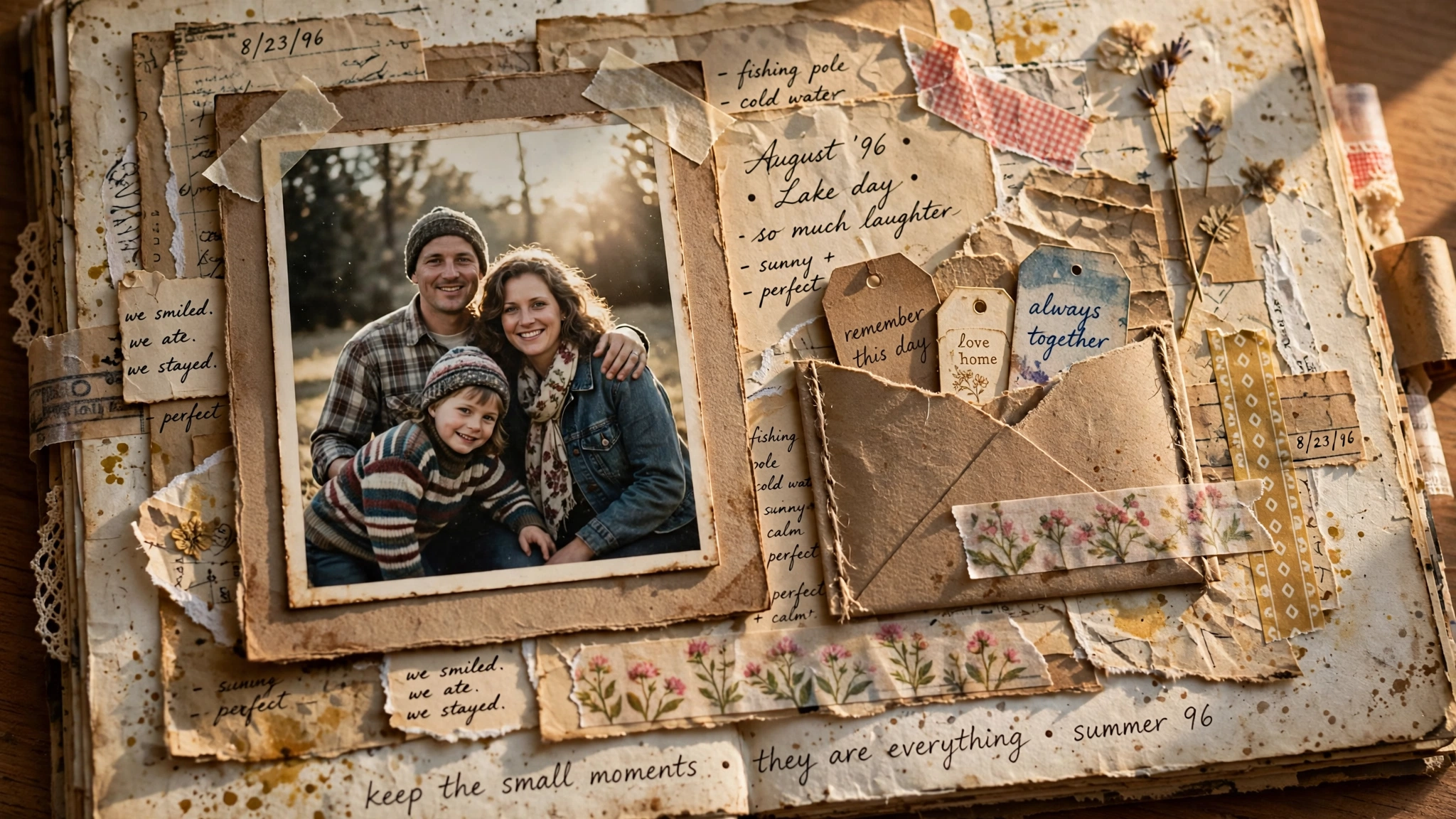
The line between junk journal and scrapbook is wonderfully blurry, and some of the most interesting paper crafts live right on it. Here are three easy ways to blend them:
Scrapbook pages inside a junk journal. Dedicate a few spreads of your junk journal to photos, using your found-paper aesthetic around them. The photos get the junk journal treatment — torn mats, washi tape, handwritten captions — and the result is a memory page with handmade soul.
Junk journal techniques in a scrapbook. Bring pockets, tuck spots, flip-outs, and tags into your scrapbook layouts. These interactive elements are junk journal staples, and they make scrapbook pages far more fun to explore.
The hybrid “memory junk journal.” Make an entire junk journal around one theme — a vacation, a baby’s first year, a wedding — using mostly found and vintage materials but anchored by photos. You get the soul of a junk journal and the purpose of a scrapbook in one book.
MAKE IT EASY, FASTER: Whichever craft you choose, coordinated vintage ephemera gives your pages a finished look in minutes — no hunting through old books required. Browse the Etopica Etsy shop for printable cliparts and ephemera that work beautifully in both junk journals and scrapbooks.
Frequently asked questions
Is junk journaling cheaper than scrapbooking?
Yes, significantly. A junk journal can be started with supplies you already own — old books, envelopes, packaging, and basic glue — while scrapbooking typically requires buying an album, coordinated papers, and embellishments upfront. Both crafts can become as budget or as spendy as you like, but junk journaling’s “use what you have” philosophy keeps the baseline near zero.
Can I put photos in a junk journal?
Absolutely. Many junk journalers include photos — they just treat them differently than scrapbookers do. Instead of matted, archival layouts, photos in junk journals get torn edges, washi tape corners, handwritten captions, and layered collage surroundings. If your priority is preserving photos for decades, use photo-safe adhesive and keep copies of irreplaceable originals.
Do I need to be artistic to start either craft?
No. Junk journaling famously requires zero drawing skill — collage, layering, and found materials do the visual work. Scrapbooking is also very beginner-friendly thanks to pre-designed paper collections and stickers that make polished pages almost automatic. Both crafts welcome complete beginners.
Which craft is better for preserving family memories?
Traditional scrapbooking, because it’s built around archival-quality, acid-free materials designed to protect photos for generations. Junk journals can hold memories too, but their mixed found materials aren’t archival by default. If longevity is your top priority, scrapbook — or make a “memory junk journal” using photo-safe supplies.
How much time does each craft take per week?
That’s entirely up to you, but junk journaling adapts better to small pockets of time — a satisfying spread can happen in 20–30 minutes. Scrapbook layouts tend to need longer sessions of an hour or more to feel complete. Many busy crafters junk journal on weeknights and save scrapbooking for weekends.
Can I sell junk journals or scrapbooks I make?
Yes, handmade journals and scrapbooks sell well on marketplaces like Etsy, especially junk journals with unique vintage character. Just be mindful of copyright: use your own photos, public-domain images, or properly licensed printable ephemera for anything commercial, rather than cutouts from modern magazines.
What supplies do I actually need to start a junk journal today?
Scissors, glue (a glue stick plus craft glue), paper you already own, one old book or a stack of junk mail, and a pen. That’s genuinely enough for your first journal. As you continue, washi tape, ink pads, and printable ephemera are the most useful upgrades. 15 Best Junk Journal Supplies for Beginners
Our Etsy shop is full of adorable printable cliparts — birthday boys & girls, sweet animals, summer and spring themes — designed to print at home and layer straight into your journal.
Browse the Clipart Shop ↗
Leave a Reply